
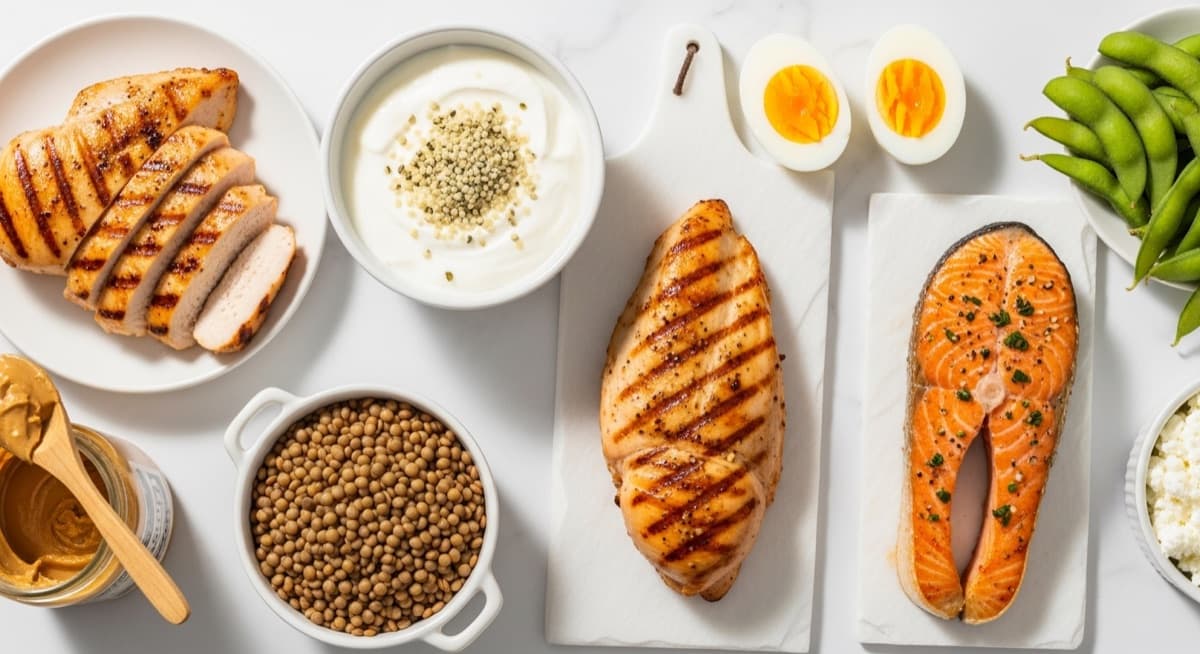
If you're trying to build muscle, lose fat, or simply stop hitting the 3 p.m. wall, high protein foods are your most reliable tool — and this list gives you 50 of the best, organized by food group, with real nutrition numbers so you can make smart choices fast.
Why Protein Deserves the Top Spot in Your Diet
Protein does three things no other macronutrient can match: it builds and repairs muscle tissue, triggers satiety hormones that keep hunger quiet for hours, and has the highest thermic effect of food, meaning your body burns more calories just digesting it compared to carbs or fat.
Most active adults benefit from roughly 0.7–1 gram of protein per pound of bodyweight per day, though optimal intake depends on your goals, age, and activity level. If you're unsure where you fall, use the Macro Calculator to get a personalized starting point. And before making major dietary changes — especially if you have kidney disease or other health conditions — consult a registered dietitian or physician.
50 High Protein Foods, Grouped by Food Group
Animal Proteins: The Heavy Hitters
These are the most protein-dense foods per calorie, with complete amino acid profiles.
- Chicken breast (cooked, 4 oz) — ~35g protein, ~165 calories. The gym staple for a reason.
- Turkey breast (cooked, 4 oz) — ~34g protein, lean and mild.
- Canned tuna in water (3 oz) — ~22g protein, almost zero fat. One of the cheapest protein sources per gram.
- Canned salmon (3 oz) — ~19g protein, plus omega-3 fatty acids.
- Sardines in olive oil (3 oz) — ~21g protein, rich in calcium and vitamin D.
- Shrimp (cooked, 3 oz) — ~20g protein, under 90 calories.
- Tilapia (cooked, 4 oz) — ~29g protein, very low fat.
- Cod (cooked, 4 oz) — ~26g protein, mild flavor, versatile.
- Halibut (cooked, 4 oz) — ~30g protein, firm texture, easy to cook.
- Lean beef (95% ground, cooked, 4 oz) — ~30g protein, plus creatine and iron.
- Sirloin steak (cooked, 4 oz) — ~33g protein, contains zinc and B12.
- Bison (cooked, 4 oz) — ~28g protein, lower saturated fat than beef.
- Pork tenderloin (cooked, 4 oz) — ~29g protein, one of the leanest cuts.
- Canadian bacon (2 oz) — ~12g protein in a quick, low-fat serving.
- Venison (cooked, 4 oz) — ~34g protein, very lean.
Eggs and Dairy: Everyday Essentials
- Whole egg (1 large) — ~6g protein; yolk contains choline for brain health.
- Egg whites (3 large) — ~11g protein, zero fat, ideal for bulking without calories.
- Greek yogurt, plain nonfat (6 oz) — ~17g protein, plus probiotics and calcium.
- Cottage cheese, 2% (½ cup) — ~14g protein; slow-digesting casein makes it great before bed.
- Skyr (6 oz) — ~17g protein, thicker than Greek yogurt, Icelandic staple.
- Part-skim ricotta (½ cup) — ~14g protein, great in savory dishes or smoothies.
- Low-fat mozzarella (1 oz) — ~8g protein, easy to snack on.
- Parmesan (1 oz) — ~10g protein; aged cheeses concentrate protein as moisture leaves.
- Milk, 1% (1 cup) — ~8g protein plus calcium and potassium.
- Whey protein powder (1 scoop, ~30g) — ~22–25g protein; one of the fastest-absorbing sources post-workout.
Plant-Based Proteins: Fiber Bonus Included
- Edamame (½ cup, shelled) — ~9g protein, 4g fiber; a complete plant protein.
- Tofu, firm (½ cup) — ~10g protein, absorbs flavors well, pairs with any cuisine.
- Tofu, extra-firm (½ cup) — ~12g protein; press out moisture for better texture when pan-frying.
- Tempeh (3 oz) — ~16g protein, plus gut-friendly fermentation benefits.
- Seitan (3 oz) — ~21g protein, made from wheat gluten; not for those with celiac disease.
- Lentils, cooked (½ cup) — ~9g protein, 8g fiber; among the best protein-to-fiber ratios in the plant kingdom.
- Black beans, cooked (½ cup) — ~8g protein, 7g fiber, iron.
- Chickpeas, cooked (½ cup) — ~7g protein, 6g fiber; roast them for a crunchy snack.
- Kidney beans, cooked (½ cup) — ~8g protein, high in folate.
- Pinto beans, cooked (½ cup) — ~8g protein, 8g fiber.
- Peas, green (½ cup) — ~4g protein; a surprisingly decent protein veggie.
- Pea protein powder (1 scoop) — ~20–24g protein; popular dairy-free alternative to whey.
Nuts, Seeds, and Butters: Calorie-Dense but Protein-Rich
- Hemp seeds (3 tbsp) — ~10g protein, complete amino acid profile, plus healthy fats.
- Pumpkin seeds / pepitas (1 oz) — ~9g protein, magnesium-rich.
- Sunflower seeds (1 oz) — ~6g protein, vitamin E.
- Peanuts (1 oz) — ~7g protein; technically a legume, nutritionally acts like a nut.
- Peanut butter, natural (2 tbsp) — ~8g protein; check labels for added sugar.
- Almond butter (2 tbsp) — ~7g protein plus vitamin E and magnesium.
- Chia seeds (2 tbsp) — ~4g protein, ~7g fiber; gel up in liquid to make protein pudding overnight.
- Cashews (1 oz) — ~5g protein, one of the creamier nuts for sauces.
Bonus: High-Protein Grains and Vegetables
- Quinoa, cooked (1 cup) — ~8g protein, complete amino acid profile, 5g fiber.
- Edamame pasta (2 oz dry) — ~24g protein; one of the best pasta swaps.
- Lentil pasta (2 oz dry) — ~21g protein, high fiber.
- Nutritional yeast (2 tbsp) — ~8g protein, plus B vitamins including B12 in fortified versions.
- Spirulina powder (1 tbsp) — ~4g protein in a single tablespoon; blends into smoothies easily.
How to Hit Your Protein Goals Every Day
Build Every Meal Around a Protein Anchor
Pick one protein-dense food as the center of each meal, then build vegetables, carbs, and fats around it. This simple rule makes hitting daily targets almost automatic.
Distribute Intake Across Meals
Research consistently supports spreading protein across three to four meals rather than loading it all at dinner. Aim for 25–40g of protein per meal to maximize muscle protein synthesis.
Pro tip: Prep a batch of cooked chicken breast, hard-boiled eggs, and cooked lentils on Sunday. Store in the fridge and you have three ready-to-go protein sources that keep hunger in check all week without cooking every night.
Pair Incomplete Plant Proteins
Plant proteins (except soy, quinoa, hemp, and buckwheat) are incomplete — they lack one or more essential amino acids. You don't need to pair them in the same meal, but eating a variety across the day covers your bases. Classic combos: rice + beans, hummus + whole wheat pita, lentil soup + whole grain bread.
Track Smarter, Not Harder
Eyeballing protein is notoriously inaccurate. Logging your meals — even for two to three weeks — reveals patterns you'd never spot otherwise. LifeBar AI lets you snap a photo of any meal and instantly see its protein, carbs, fat, and micronutrients, so you can course-correct in real time instead of guessing.
High-Protein Foods: Meal Ideas to Get You Started
Breakfast
- Greek yogurt parfait: 6 oz nonfat Greek yogurt + ½ cup berries + 2 tbsp hemp seeds → ~25g protein
- Egg white scramble: 4 egg whites + 1 whole egg + spinach + feta → ~22g protein
Lunch
- Chicken and lentil bowl: 4 oz grilled chicken breast + ½ cup cooked lentils + roasted vegetables + tahini → ~45g protein
- Tuna lettuce wraps: 1 can tuna + avocado + diced celery + Dijon mustard in romaine leaves → ~30g protein
Dinner
- Bison stir-fry: 4 oz lean ground bison + edamame + broccoli + tamari + served over quinoa → ~40g protein
- Tempeh tacos: 3 oz crumbled tempeh + black beans + corn salsa + lime crema in corn tortillas → ~30g protein
Snacks
- Cottage cheese + sliced cucumber + everything bagel seasoning → ~14g protein
- Hard-boiled eggs (2) + pumpkin seeds (1 oz) → ~21g protein
Common Mistakes That Undermine Protein Intake
- Front-loading calories at dinner. You can't make up all your protein in one meal as efficiently as spreading it out.
- Treating protein bars as real food. Many are closer to candy bars with a protein label. Read the ingredient list.
- Ignoring liquid calories. Full-fat lattes and juice cocktails can eat into your macros fast — check the numbers before you assume something is "healthy."
- Skipping post-workout protein. The anabolic window isn't as tight as once believed, but getting protein within a few hours of training still matters.
Frequently Asked Questions
How much protein do I actually need per day?
Most active adults aiming for muscle building benefit from roughly 0.7–1g of protein per pound of bodyweight (or about 1.6–2.2g per kilogram). Sedentary adults need less — around 0.36g per pound is the established minimum. Your exact needs depend on age, activity level, and goals; a registered dietitian can help you dial in a personalized number.
Are plant proteins as effective as animal proteins for muscle building?
Yes, with planning. Animal proteins are typically more bioavailable and contain all essential amino acids in ideal ratios. Plant proteins can absolutely support muscle growth, but you generally need a slightly higher total intake and more variety to match the amino acid profile of animal sources. Soy, quinoa, hemp, and edamame are the top complete plant protein options.
What's the best high-protein food for weight loss?
There's no single best choice, but protein-dense, lower-calorie options like chicken breast, egg whites, Greek yogurt, shrimp, and cottage cheese give you the most protein per calorie. These keep you full longer without blowing your calorie budget.
Can eating too much protein be harmful?
For healthy adults with normal kidney function, high protein intakes within reasonable ranges (up to ~1g per pound of bodyweight) are generally considered safe. If you have existing kidney disease or other medical conditions, consult your doctor before significantly increasing protein intake, as high protein diets can stress compromised kidneys.
Is protein timing important, or does total daily intake matter more?
Total daily protein intake matters most. That said, distributing protein evenly across meals — rather than eating most of it at dinner — appears to optimize muscle protein synthesis throughout the day. A post-workout protein source within a few hours of training is a smart habit, but missing the mythical "anabolic window" by an hour won't derail your progress.
The Bottom Line
The 50 high protein foods on this list cover every dietary style, budget, and taste preference — from a $1 can of tuna to premium bison, from Greek yogurt to tempeh tacos. The strategy is simple: anchor every meal with a solid protein source, spread your intake across the day, and track what you're actually eating rather than guessing.
Knowing the numbers is where most people fall short. LifeBar AI removes the friction: photograph your meal, get the full macro breakdown in seconds, and stay on target without spreadsheets or manual logging. Download it and see exactly how much protein you're actually eating today — the answer might surprise you.