
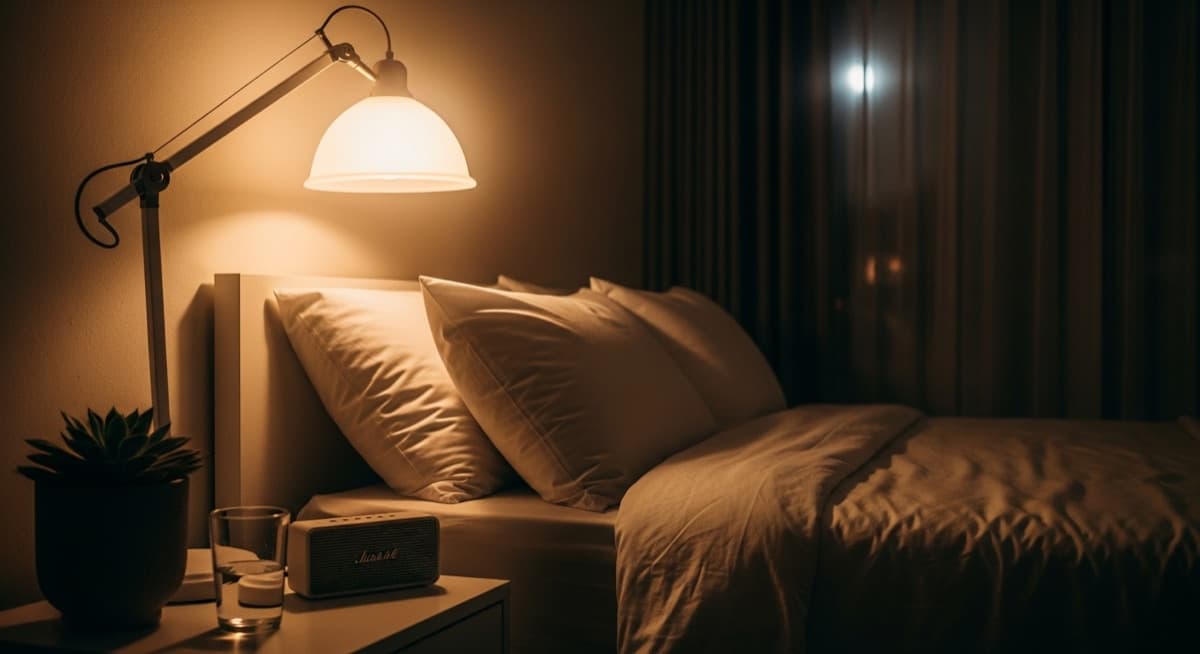
The right sleep music can mean the difference between tossing for hours and drifting off within minutes — and the science behind why certain sounds calm a racing mind is more fascinating than most people realize. In this guide you'll learn which types of audio actually work, how to use them strategically, and what to avoid so you stop sabotaging your own rest.
Why Sleep Music Works on Your Brain
Sound reaches the auditory cortex even when you're unconscious. The brain doesn't fully "turn off" during sleep — it actively filters incoming stimuli, deciding what's a threat and what's safe background noise.
Certain sound patterns exploit this filtering system in your favor:
- Rhythmic, predictable audio signals to the limbic system that the environment is stable and non-threatening, lowering cortisol and heart rate.
- Low-frequency tones (below roughly 60 Hz) activate the parasympathetic nervous system — the "rest and digest" branch that opposes the fight-or-flight stress response.
- Consistent volume and tempo prevents the brain from doing surprise-detection work, which is exactly what keeps light sleepers awake.
This is why an air conditioner hum or a fan helps many people sleep better — it's not the cold air, it's the steady acoustic "blanket" that masks unpredictable spikes like traffic or a neighbor's TV.
The Main Categories of Sleep Music and Sounds
Not all calming audio is created equal. Here's what each type actually does and who it tends to work best for.
Classical and Ambient Music
Slow-tempo classical — think Debussy, Satie, or late Beethoven — typically sits around 60 beats per minute, which entrains the heart rate downward toward resting levels. Studies on pre-sleep music consistently point to tempo as the dominant variable: tracks under 80 BPM tend to help; anything above 120 BPM tends to activate rather than sedate.
Ambient electronic music (Brian Eno's *Music for Airports* is the canonical example) works similarly by stripping out percussive attack and melodic tension, leaving only slowly evolving textures.
Nature Sounds
Rain, ocean waves, rivers, and wind through trees are among the most universally effective sleep sounds across cultures. They're examples of pink noise — sound where energy is distributed across frequencies with more power in the lower bands, mimicking the acoustics of natural environments humans evolved in.
Best uses for nature sounds:
- Light sleepers who need continuous masking all night
- People who find music with melody too engaging (it activates the "tracking" part of the brain)
- Kids and babies (rain sounds are particularly well-tolerated)
White, Pink, and Brown Noise
These differ in their frequency distribution:
- White noise — equal energy at all frequencies; sounds like TV static; can feel harsh over long periods
- Pink noise — louder at low frequencies, softer at high; sounds like steady rain; widely considered the most sleep-friendly
- Brown noise (also called red noise) — even more bass-heavy; sounds like a strong wind or distant waterfall; preferred by people who find white noise too bright
For most adults, pink noise is the starting point worth trying first.
Binaural Beats
Binaural beats play two slightly different tones in each ear; the brain perceives a third "phantom" frequency equal to the difference. In theory, delta-range beats (0.5–4 Hz) could nudge the brain toward deep-sleep brainwave states.
The evidence here is real but modest — binaural beats appear to shorten sleep onset for some people and may improve subjective sleep quality, but they're not a replacement for good sleep hygiene. They require headphones to work, which makes all-night use impractical for most.
Guided Sleep Meditations and ASMR
Spoken-word sleep content — body scans, progressive muscle relaxation, sleep stories — works differently: instead of acoustic masking, it gives the mind a "task" (following the voice) that crowds out the anxious thought loops that cause sleep-onset insomnia. Many people find this more effective than music alone.
ASMR (autonomous sensory meridian response) triggers a tingling relaxation response in susceptible listeners through soft sounds like whispering, tapping, or page-turning. Not everyone experiences ASMR, but those who do often find it a powerful sleep aid.
How to Use Sleep Music Effectively
Getting the audio right is only half the equation. Delivery and timing matter just as much.
Volume and Format
- Keep volume at 40–50 dB — roughly the level of a quiet conversation. Louder than that and you're stimulating rather than masking.
- Use a sleep timer so audio stops after 20–30 minutes if possible. Your brain adapts to the soundscape; having it cut off once you're asleep prevents disruption during lighter sleep stages.
- Bluetooth speakers (placed across the room) beat earbuds for all-night use — sustained earbud pressure disrupts sleep and can cause ear canal issues over time.
Timing and Routine
- Start your sleep music 15–20 minutes before you want to fall asleep, not the moment you hit the pillow. Pre-sleep wind-down is when it's most effective.
- Pair it with consistent pre-bed rituals — the same playlist every night becomes a Pavlovian cue that tells your nervous system sleep is coming.
- Dim your lights and put your phone face-down while the audio plays. Blue-light exposure undermines the melatonin suppression that your sleep music is trying to support.
Pro tip: Build a dedicated "sleep playlist" of 45–60 minutes you never listen to during the day. Reserve it exclusively for bedtime. Within a few weeks, simply pressing play will start triggering drowsiness — your brain will learn the association.
What to Avoid
Some "relaxing" audio choices actually backfire:
- Lyrics-heavy music — your language-processing brain can't fully disengage; even familiar songs with words keep neural activity elevated
- Dynamic range extremes — soundtracks with sudden loud passages jolt the brain out of early sleep stages
- Auto-playing algorithmically curated playlists — the unpredictability of next-track selection is a low-grade stressor for light sleepers
- Podcasts or audiobooks with engaging plots — same problem as lyrics; your narrative-tracking system stays active
Sleep Music Apps and Platforms Worth Knowing
You don't need a paid subscription to find quality sleep audio, but some platforms do it better than others:
- Spotify and Apple Music both have dedicated sleep playlists; search "sleep sounds" or "rain for sleep" — curated station playlists tend to avoid jarring transitions
- YouTube has enormous free libraries of 8–10 hour nature sound loops designed specifically for uninterrupted sleep
- Calm and Headspace offer guided sleep meditations and Sleep Stories in their paid tiers; the structured format helps people who struggle with unguided audio
- myNoise (free web app) lets you mix and customize individual sound layers — rain intensity, thunder proximity, city ambience — with precise control
For iOS and Android users building a full wellness routine, tracking what you eat alongside how you sleep gives you data on the diet-sleep connection. Tools like LifeBar AI make it easy to log meals instantly so you can spot patterns — like whether late-night carbs or caffeine past 2 PM are quietly wrecking your rest.
The Sleep–Nutrition Connection
Speaking of which: what you eat in the hours before bed directly affects how well sleep music can do its job. A nervous system flooded with cortisol from a late espresso or spiking blood sugar from a heavy dessert is fighting against even the best soundscape.
Foods that support sleep onset:
- Complex carbohydrates (oats, sweet potato, brown rice) — raise brain tryptophan availability
- Magnesium-rich foods (pumpkin seeds ~37% DV per ounce, spinach, almonds) — magnesium regulates GABA receptors, the brain's main calming neurotransmitter
- Tart cherries — one of few foods with measurable natural melatonin content
What to cut off:
- Caffeine — half-life is roughly 5–6 hours; a 3 PM coffee can still be half-active at 9 PM
- Alcohol — sedates initially but fragments REM sleep in the second half of the night
- Large meals within 2–3 hours of bed — digestion raises core body temperature, which opposes the temperature drop your body needs to initiate deep sleep
If you're tracking your nutrition and want to calculate your macros to see where you're landing on sleep-supportive nutrients, that's a quick win for connecting your eating patterns to your sleep quality.
Frequently Asked Questions
Does sleep music actually work, or is it placebo?
Both, and that's not a knock. The acoustic masking effect of pink noise and nature sounds is well-documented and works regardless of belief — it literally reduces the number of novel sounds your brain has to process. The conditioned relaxation response (Pavlovian association with a familiar playlist) is also real and compounds over time. Neither mechanism requires belief to function.
Is it okay to sleep with music playing all night?
It depends on the format. Continuous, low-variance audio like rain sounds or pink noise is generally fine all night at low volume. Music with dynamic shifts in volume or tempo can disrupt lighter sleep stages around 3–4 AM when your body naturally cycles toward waking. A sleep timer set to 30–45 minutes is safer for most people using melody-based music.
Can children use sleep music safely?
Yes — white noise and nature sounds are widely used in pediatric sleep routines. Keep volume below 50 dB and position speakers at least a few feet from the crib or bed. Avoid prolonged very high volumes, which is a concern in some marketed baby sound machines; a conversational-level volume is the right benchmark.
What's the best frequency for deep sleep?
Delta brainwave frequencies (0.5–4 Hz) characterize the deepest sleep stages. Binaural beats in this range are designed to encourage delta-wave activity, though individual results vary. For most people, consistent pink noise or slow ambient music at low volume is more practical and nearly as effective.
Should I consult a doctor if I have chronic insomnia?
Absolutely — if sleep problems are persistent, affecting your daytime function, or accompanied by symptoms like loud snoring or gasping, speak with a doctor before relying solely on audio interventions. Chronic insomnia often responds well to cognitive behavioral therapy for insomnia (CBT-I), and underlying conditions like sleep apnea require medical evaluation.
The Bottom Line
Sleep music isn't magic, but it's one of the highest-leverage, lowest-effort interventions in any sleep hygiene toolkit. Start with pink noise or slow nature sounds at low volume, build a consistent pre-bed routine around the same audio, pair it with smart nutrition choices in the evening hours, and give it at least two weeks before judging results.
Better sleep is a system, and every component — sound, light, food, timing — compounds the others. If you want to close the loop on the nutrition side, LifeBar AI makes tracking your evening meals a ten-second habit so you can see exactly how your diet is shaping your rest.