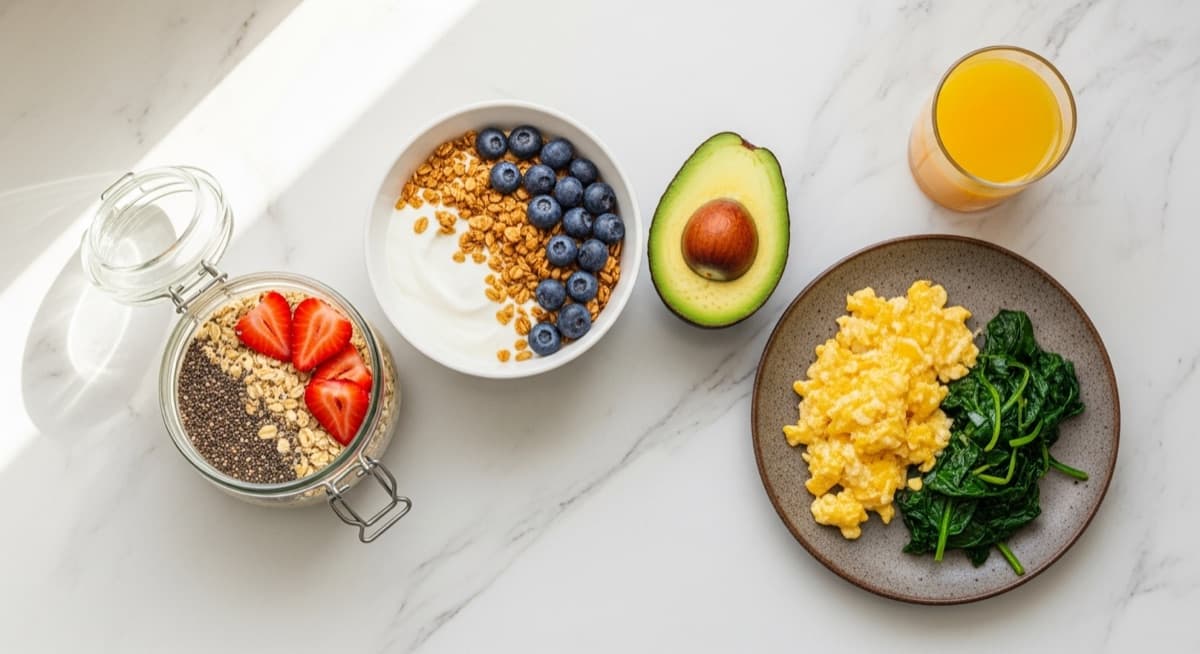
Finding genuinely good healthy breakfast ideas — ones that are fast, filling, and don't taste like cardboard — is harder than it should be. These 25 ideas cover every scenario: high-protein builds for gym mornings, five-minute grab-and-go options, make-ahead meal prep, plant-based picks, and savory alternatives for people who can't stand sweet breakfasts.
Why Breakfast Actually Matters
A well-structured morning meal sets your metabolic tone before anything else hits your day. A combination of protein, fiber, and healthy fat digests slowly, keeps blood sugar stable, and signals satiety hormones to stay active — which tends to reduce mid-morning snacking and impulsive food choices later.
The problem is that most "quick breakfast" options — cereals, muffins, flavored yogurts, toast with jam — lean heavily on refined carbs and added sugar. They spike energy fast and drop it faster. The 25 ideas below are built around a better formula.
Pro tip: Prioritize 20–30g of protein at breakfast. That single change — more than any fancy superfood — consistently reduces late-morning hunger and supports muscle maintenance, especially important for active people or those over 40.
High-Protein Healthy Breakfast Ideas to Keep You Full
These are the heavy hitters. Protein is the most satiating macro, and breakfast is often where people get the least of it.
Egg-Based Options
- Scrambled eggs with spinach and feta — 3 large eggs (~18g protein) plus a handful of spinach for iron and a tablespoon of feta for calcium. Ready in under 5 minutes.
- Egg muffins — Beat eggs with diced peppers, onion, and turkey sausage; pour into a muffin tin; bake at 375°F for 20 minutes. Makes 12; about 8–10g protein each and great cold the next day.
- Smoked salmon scramble — Eggs (~15g protein) paired with omega-3-rich smoked salmon, capers, and a swipe of cream cheese. Restaurant-level taste, 10-minute effort.
- Hard-boiled eggs + avocado toast — Two eggs plus half an avocado on whole-grain bread. Protein, healthy monounsaturated fat, and ~5g fiber from the avocado in one simple plate.
Greek Yogurt and Cottage Cheese Builds
- Greek yogurt parfait — Full-fat or 2% Greek yogurt (~17g protein per cup) layered with mixed berries and a tablespoon of chia seeds (~5g fiber). No cooking required.
- Cottage cheese bowl with peaches and hemp seeds — Cottage cheese delivers roughly 25g protein per cup. Add sliced peaches, a drizzle of honey, and hemp seeds for omega-3s and texture.
- Savory cottage cheese toast — Spread cottage cheese on whole-grain toast, top with cherry tomatoes, everything bagel seasoning, and a drizzle of olive oil. Sounds odd; tastes great.
Quick Healthy Breakfast Ideas for Busy Mornings
Five minutes or less, no alarm-clock negotiation required.
- Peanut butter banana roll-up — Natural peanut butter (~8g protein, ~2g fiber per 2 tbsp) spread on a whole-wheat tortilla with a sliced banana. Roll it, eat it on the way out.
- Overnight oats — Rolled oats, milk or plant milk, chia seeds, and a scoop of protein powder combined the night before. Zero morning effort; 25–35g protein depending on your powder.
- Protein smoothie — Frozen banana, a large handful of spinach, one scoop vanilla protein powder, almond butter, and almond milk. Blends in 60 seconds; ~25–30g protein.
- High-fiber cereal + milk + berries — Unglamorous but legitimate. Look for cereals with 5g or more of fiber per serving, add low-fat milk and fresh berries, and you have a fast, nutrient-dense meal.
- Apple slices + almond butter + string cheese — Zero prep. Portable. Covers all three macros without turning on the stove.
Make-Ahead Healthy Breakfast Ideas for Meal Prep
Batch on Sunday, cruise the rest of the week.
Baked and Overnight Preps
- Baked oatmeal — Combine rolled oats, mashed banana, eggs, milk, cinnamon, and blueberries in a baking dish. Bake at 350°F for 35–40 minutes. Slice into portions; 90 seconds to reheat each morning.
- Chia pudding — Three tablespoons of chia seeds plus one cup of coconut or oat milk, a splash of vanilla. Stir, refrigerate overnight. Top with mango or kiwi. About 10g fiber per serving; keeps four days.
- Sheet-pan frittata — Whisk a dozen eggs with roasted vegetables (zucchini, bell peppers, mushrooms), pour onto a parchment-lined sheet pan, and bake at 375°F for 20–25 minutes. Cut into 8 squares. Store in the fridge up to four days; reheat in a minute.
- Freezer breakfast burritos — Fill whole-wheat tortillas with scrambled eggs, black beans (~8g protein + ~6g fiber per half cup), roasted veggies, and salsa. Wrap in foil, freeze. Microwave 2 minutes from frozen.
Plant-Based Breakfast Ideas Worth Trying
You don't need eggs or dairy to hit solid protein and fiber targets in the morning.
- Tofu scramble — Crumble firm tofu into a hot pan with olive oil, turmeric, nutritional yeast, and your preferred vegetables. Tofu delivers roughly 10g protein per half cup with very little saturated fat.
- Tempeh bacon and avocado toast — Marinate tempeh strips in tamari, maple syrup, and smoked paprika, then pan-fry until crispy. About 15g protein per 3-oz serving; a legitimate bacon substitute.
- Smoothie bowl — Blend frozen acai or pitaya with frozen mango and plant-based protein powder into a thick base. Top with granola, banana slices, and chia seeds. Eating it with a spoon signals a full meal to your brain in a way drinking a smoothie doesn't.
- Peanut butter overnight oats (vegan) — Rolled oats, oat milk, peanut butter, chia seeds, and a sliced banana. No protein powder needed; still clears 15g protein per serving.
- Red lentil crepes — Blend soaked red lentils into a thin batter and cook like crepes. Fill with sautéed spinach and mushrooms. About 18g plant protein per two crepes; genuinely impressive.
Savory Breakfast Ideas That Break the Sweet Routine
Most breakfast menus tilt sweet by default. Savory options often land higher on protein and lower on added sugar — which is exactly what you want.
- Avocado and smoked salmon on rye — Whole-grain rye bread topped with half an avocado (~5g fiber) and 2 oz smoked salmon (~13g protein). Add a squeeze of lemon and you're done.
- Turkey and veggie breakfast wrap — Whole-wheat tortilla with sliced turkey breast (~10g protein per 2 oz), scrambled eggs, roasted peppers, and a swipe of hummus for flavor and additional fiber.
- Miso soup with tofu and soft-boiled eggs — Underrated outside of Japan. Warm, high in gut-supporting probiotics from the miso, and filling without being heavy. Ideal if your digestion prefers lighter mornings.
- Sweet potato and black bean hash — Diced sweet potato (rich in vitamin A and ~4g fiber per medium potato) roasted with black beans, cumin, onion, and smoked paprika. Top with a fried egg. Weekend-worthy.
How to Build a Balanced Breakfast Without Overthinking It
You don't need to track every gram to eat well at breakfast. A practical rule that works:
The Simple Three-Part Build
- Protein source — eggs, Greek yogurt, cottage cheese, tofu, or smoked salmon. Aim for a palm-sized portion.
- Complex carbohydrate — oats, whole-grain bread, sweet potato, or fruit. Aim for a fist-sized portion.
- Healthy fat — avocado, nut butter, olive oil, or seeds. Aim for a thumb-sized portion.
What to Limit
- Sugary cereals and pastries — high glycemic load, minimal satiety
- Flavored yogurts — often contain as much added sugar as dessert; buy plain and sweeten it yourself
- Fruit juice — strips the fiber out of whole fruit and spikes blood sugar faster
If you want to take the guesswork out of hitting your specific targets, the macro calculator lets you dial in your daily protein, carb, and fat goals based on your body and activity level. And knowing what you planned to eat is one thing — knowing what you actually ate is where most people fall short.
As always, if you have specific health conditions, metabolic goals, or are considering significant dietary changes, consult a registered dietitian before overhauling your eating patterns.
Frequently Asked Questions
What makes a breakfast "healthy"?
A healthy breakfast combines adequate protein, dietary fiber, and a source of healthy fat. These three nutrients work together to slow digestion, sustain energy, prevent blood sugar spikes, and keep you feeling full until lunch. Minimally processed ingredients and limited added sugar are the practical markers to look for. It doesn't have to be elaborate — it just has to hit those three pillars.
How much protein should I eat at breakfast?
Most nutrition research points to 20–30g of protein at breakfast as an effective range for satiety and muscle protein synthesis. That translates to roughly three large eggs plus a cup of Greek yogurt, or a protein smoothie with a quality protein powder. If you're less active or younger, the lower end of that range is perfectly adequate.
Is it okay to skip breakfast?
For some people, yes. Intermittent fasting protocols that push the first meal to later in the day work well for individuals who aren't hungry in the morning and don't experience energy drops or focus issues from skipping. However, if you exercise in the morning, manage blood sugar conditions, or find yourself overeating at lunch and dinner, a structured breakfast typically helps. Speak with a registered dietitian before making significant changes to your eating timing or pattern.
Can I eat the same breakfast every day?
Nutritionally, rotating two to four breakfasts weekly gives you broader micronutrient coverage than eating the exact same thing every morning. Practically, keeping a consistent "base" — like overnight oats — and rotating the toppings and mix-ins is the easiest way to stay consistent without flavor fatigue.
What's the fastest high-protein breakfast with no prep?
Plain Greek yogurt straight from the container with a handful of berries and a small handful of walnuts or almonds. No cooking, no cleanup, and you're at 20g or more of protein in under two minutes. Keep a container in the fridge and that removes almost every excuse for skipping breakfast on a rushed morning.
The Bottom Line
The best healthy breakfast ideas aren't the most complicated ones — they're the ones you'll actually make consistently. Build your mornings around protein, fiber, and healthy fat, keep three to five go-to options in rotation, and let your results do the talking.
The hard part is knowing whether what you're eating is actually moving the needle on your goals. LifeBar AI lets you snap a photo of any meal and instantly get a full macro and nutrition breakdown — so you can stop guessing and start making informed choices from the very first bite of the day.