
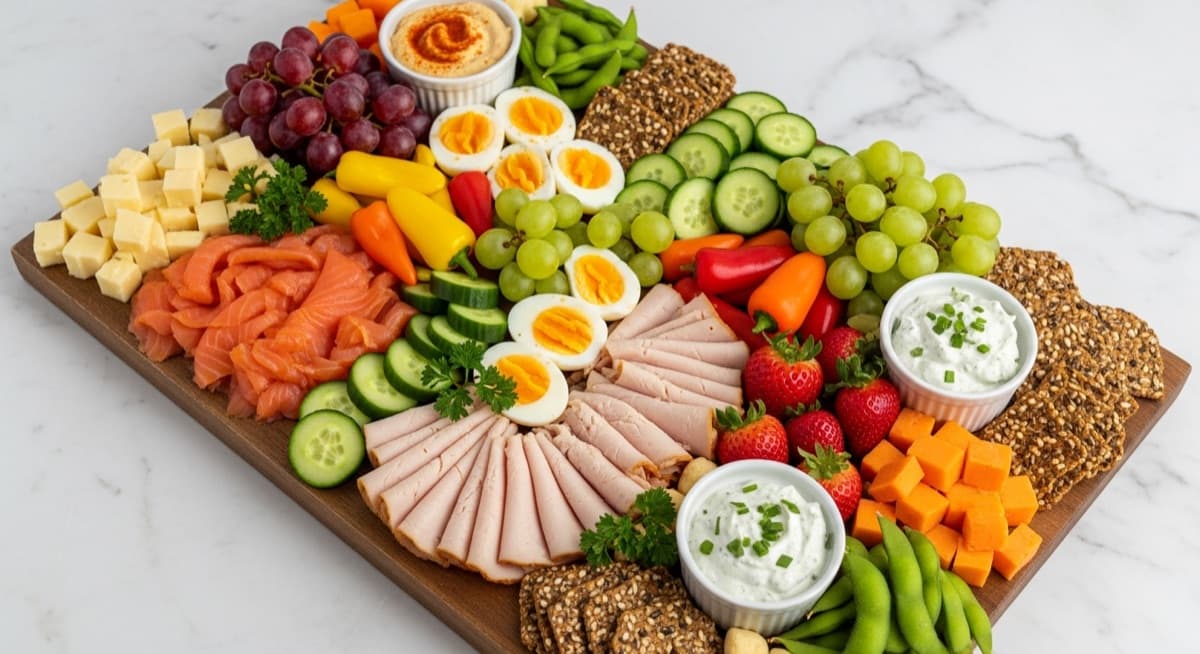
If you've been scrolling for charcuterie board ideas that actually fit a health-conscious lifestyle, you're in the right place. The classic grazing board gets a nutritious upgrade here — same gorgeous spread, smarter ingredient swaps — so you can snack, entertain, or meal-prep without derailing your goals.
Why Charcuterie Boards Work for Healthy Eating
Charcuterie boards are inherently flexible. Unlike a plated meal, a well-built board lets guests (or just you) self-portion a variety of proteins, fiber sources, and healthy fats in a single sitting. That variety isn't just visually appealing — it naturally encourages mindful eating because you slow down, graze, and sample instead of inhaling one dish.
The key to making a board genuinely nutritious is intentional ingredient selection: prioritizing lean proteins, fiber-rich produce, and whole-food fats while keeping highly processed, high-sodium components as accents rather than anchors.
Choosing Your Proteins Wisely
Protein is the backbone of any satisfying board. Aim for a mix of textures and flavors.
Lean Meat Options
- Sliced turkey breast — roughly 25g protein per 3 oz serving, low saturated fat
- Prosciutto or bresaola — use sparingly (high sodium), but a few slices add rich flavor with minimal volume
- Grilled chicken strips — meal-prep friendly; slice thin and fan out over the board
- Smoked salmon — excellent source of omega-3 fatty acids and about 17g protein per 2 oz
Plant-Based Protein Additions
- Edamame — about 9g protein per half-cup, high in fiber and magnesium
- Roasted chickpeas — crunchy, satisfying, roughly 6g protein and 5g fiber per quarter-cup
- Hard-boiled eggs — 6g protein each, easy to slice and arrange
Pro tip: When building a healthy board, mentally divide the board surface into thirds: one-third protein, one-third produce, one-third everything else (cheese, dips, crackers). This keeps the balance without obsessing over exact portions.
Smart Cheese Selections
Cheese often gets unfairly cut from "healthy" boards. The truth: a 1 oz serving of most cheeses delivers 5–8g protein and important calcium. The goal is mindful inclusion, not elimination.
- Part-skim mozzarella pearls — mild, lower in fat than aged cheeses, great with cherry tomatoes
- Feta — bold flavor so a little goes far; add crumbled over veggies or olives
- Manchego or aged Parmesan — intense flavors mean smaller portions satisfy
- Cottage cheese or labneh as a dip — high protein, creamy texture, works as a board centerpiece
Arrange cheese in small portions spread across the board so it looks abundant without dominating the macro breakdown.
Produce: The Real Star of Healthy Charcuterie Board Ideas
This is where healthy charcuterie board ideas diverge most from traditional versions. Load up on colorful, crunchy produce — it adds volume, fiber, micronutrients, and visual drama simultaneously.
Raw Vegetables
- Mini sweet peppers — vitamin C powerhouse, satisfying crunch
- Cucumber slices — hydrating, nearly zero calories, pairs with everything
- Radishes — peppery bite, fiber, folate
- Sugar snap peas — about 2g fiber per half-cup, naturally sweet
- Celery sticks — great dipper, high water content
Fresh and Dried Fruit
- Grapes — natural sweetness, antioxidants, easy to grab
- Sliced green apple — fiber-rich (~4g per medium apple), tart contrast to savory elements
- Strawberries or blackberries — high in vitamin C and anthocyanins
- Dried apricots or figs (small amounts) — concentrated sweetness and iron; watch portions as sugar density is higher
Aim for 2–3 vegetable options and 1–2 fruit options per board so produce covers roughly a third of the total spread.
Healthy Dips and Spreads
Dips pull a board together and give you a delivery vehicle for the raw veggies. Skip the cream cheese-heavy options as your base; build around these instead.
- Hummus — chickpea base delivers fiber (~2g per 2 tbsp) and plant protein; choose a low-sodium variety or make your own
- Tzatziki — Greek yogurt + cucumber + dill; high protein, probiotic-rich
- Guacamole — healthy monounsaturated fats from avocado (~7g per 2 tbsp), potassium, B vitamins
- White bean dip — blend cannellini beans with lemon, garlic, and olive oil; similar nutrient profile to hummus with a different flavor
- Almond butter or sunflower seed butter — pairs surprisingly well with apple slices and dark chocolate for a sweet corner of the board
Offer two or three dips in small bowls or ramekins to anchor different zones of the board.
Crackers and Whole-Grain Bases
Traditional charcuterie boards lean heavily on refined white crackers. Swap or supplement with:
- Whole-grain seed crackers — look for versions with at least 2g fiber per serving
- Brown rice cakes — light, gluten-free option
- Cucumber rounds or endive leaves — use as zero-carb cracker replacements for dipping
- Whole-wheat pita triangles — toasted for structure, pairs well with hummus and tzatziki
- Ryvita or Wasa crispbreads — low calorie, surprisingly filling, high fiber
Keep crackers to one section of the board rather than scattered everywhere — this naturally limits mindless crackers-plus-cheese stacking.
Building a Board for Specific Nutrition Goals
High-Protein Board
Anchor with smoked salmon, sliced turkey, hard-boiled eggs, edamame, and labneh. Minimize crackers; go heavy on cucumber rounds as the base. Estimated protein per generous serving: 30–40g.
Low-Carb / Keto Board
Skip crackers entirely. Build around: cured meats, full-fat cheese cubes, olives, cucumber, radishes, and avocado slices. Fill dip space with guacamole and a cream cheese-based herb dip. Keeps net carbs low while fat and protein are satisfying.
Fiber-Forward / Gut Health Board
Prioritize: roasted chickpeas, edamame, snap peas, apple slices, figs, hummus, and whole-grain crispbreads. Gut health benefits compound when you combine prebiotic fiber (legumes, apple pectin) with a probiotic dip like tzatziki.
Vegan Board
Eliminate meat and cheese; replace with roasted chickpeas, edamame, marinated tofu cubes, cashew-based cheese spread, an array of produce, hummus, guacamole, and dark chocolate for a satisfying finish.
Tracking Macros on a Grazing Board
One of the trickiest parts of board eating is estimating how much you actually consumed. Because you're grazing rather than measuring, it's easy to undercount — especially with calorie-dense items like cheese, nuts, and dips.
A practical approach: before the board hits the table, plate a personal portion for yourself. This makes it far easier to log accurately. Use the macro calculator to build a rough target for your snack or meal before you sit down, then snap a photo of your personal plate with LifeBar AI to get an instant breakdown — the AI handles the estimation so you don't have to eyeball every gram.
If you're building boards regularly for meal prep or entertaining, checking out the LifeBar blog for more macro-friendly recipe ideas can help you keep variety high without losing nutritional focus.
As always, if you have specific dietary restrictions, chronic conditions, or significant nutrition goals, consult a registered dietitian before making major changes to your eating patterns.
Frequently Asked Questions
Are charcuterie boards actually healthy?
They can absolutely be. A traditional board heavy on cured meats, aged cheese, and refined crackers skews high in sodium and saturated fat. But a thoughtfully built board — anchored in lean protein, fresh produce, legume-based dips, and whole-grain bases — becomes a genuinely balanced, nutrient-dense spread. The key is intentional ingredient selection, not eliminating the concept.
How do I build a charcuterie board for weight loss?
Focus on volume and protein. Load half the board with raw vegetables (high water content, high fiber, low calories), anchor one-third with lean proteins like turkey, salmon, or edamame, and treat cheese, cured meats, and crackers as flavor accents rather than the main event. Dipping sauces like hummus and tzatziki add satisfaction without heavy calorie density.
What are good low-sodium options for a healthy charcuterie board?
Sodium hides in cured meats, aged cheeses, and many commercial crackers. To keep it low: use fresh or roasted chicken instead of cured deli meats, opt for fresh mozzarella over aged high-sodium cheeses, choose unsalted nuts, make your own hummus (store versions often add significant salt), and use cucumber slices or endive as cracker replacements.
How far in advance can I prep a charcuterie board?
Most produce and protein elements can be prepped 24 hours ahead and stored covered in the fridge. Avocado-based dips (guacamole) should be made day-of to prevent browning. Crackers and crispbreads should be added last-minute to stay crispy. Assemble the board 30–60 minutes before serving so ingredients come to room temperature slightly — flavors, especially cheese, are better not ice cold.
How much food should I plan per person for a charcuterie board?
As an appetizer or light snack, plan about 2 oz of protein and 1–1.5 oz of cheese per person. As a main meal, roughly double that. Produce and dips can be generous since they're lower in calories. For large groups, multiple smaller boards are easier to manage and replenish than one giant board.
The Bottom Line on Charcuterie Board Ideas
Building a healthy charcuterie board is less about restriction and more about smart composition — lean proteins, abundant produce, whole-food fats, and a few well-chosen indulgences that make the board feel celebratory. Whether you're hosting a party, prepping a weekend snack spread, or just making Tuesday night interesting, these charcuterie board ideas prove that eating well and eating beautifully aren't mutually exclusive.
The trickiest part is knowing what you actually ate. Take the guesswork out of it — snap a photo of your board with LifeBar AI and get your macros in seconds, no measuring cups required.