
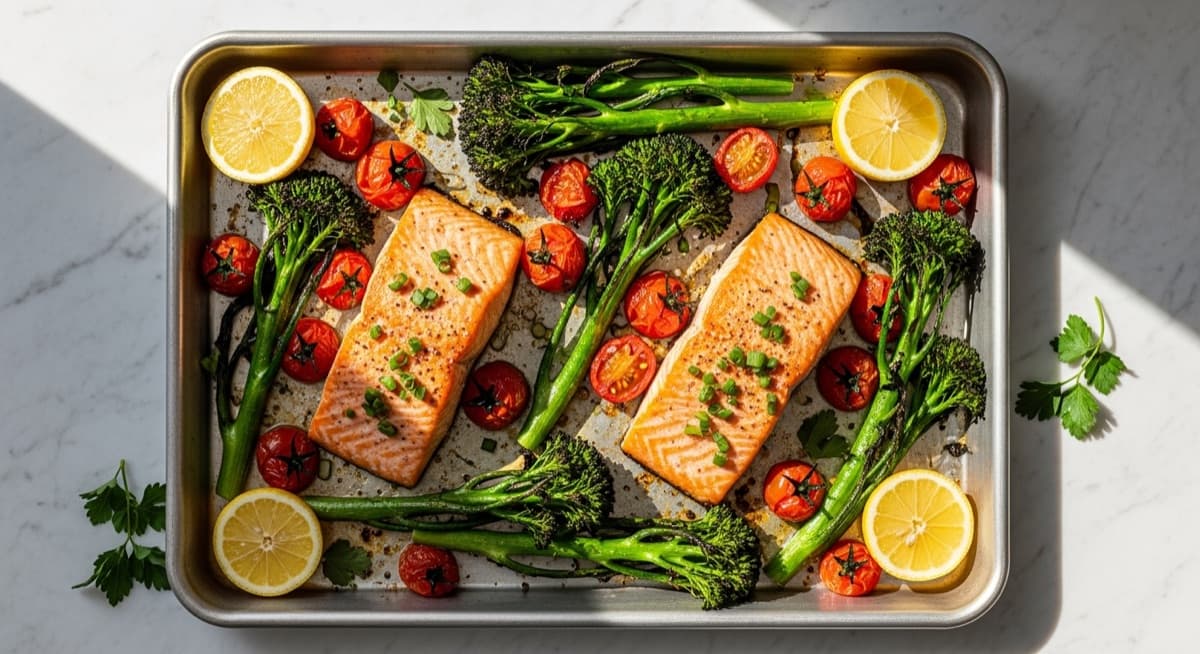
Sheet pan meals are the weeknight solution that finally makes healthy cooking feel effortless — toss a protein and a pile of vegetables on one pan, slide it into a hot oven, and come back to a complete dinner with almost no cleanup. In this guide you'll find 20 specific, flavor-packed ideas plus the practical framework to build your own variations forever.
Why Sheet Pan Cooking Is a Win for Healthy Eating
Eating well consistently is mostly a logistics problem, not a discipline problem. Sheet pan dinners fix the logistics:
- One pan, one cleanup. Lower friction means you actually cook instead of ordering takeout.
- High-heat roasting unlocks flavor. At 400–425°F, natural sugars in vegetables caramelize — that depth of flavor steaming never achieves is why roasted broccoli tastes nothing like boiled broccoli.
- Macro-friendly by default. Lean protein plus non-starchy vegetables plus a small pour of healthy fat covers three macro buckets in one go.
- Scales for meal prep. Double the recipe, use two pans, and you've handled three lunches without extra effort.
Whether your goal is hitting a protein target, cutting processed food, or simply stopping the Tuesday takeout spiral, a sheet pan dinner gets you there faster than almost any other cooking method.
The Four-Part Formula Behind Every Great Sheet Pan Meal
Master this template once and you can improvise endlessly:
1. Anchor Protein (4–6 oz per person)
Chicken thighs, salmon fillets, shrimp, pork tenderloin, lean beef strips, firm tofu, or chickpeas. Target at least 25–35 g protein per serving — it's the factor most responsible for keeping you full through the evening.
2. High-Volume Vegetables (2–3 cups per person)
Broccoli, bell peppers, zucchini, asparagus, Brussels sprouts, sweet potato, cauliflower, green beans. Non-starchy vegetables add 3–6 g of fiber per cup plus vitamins and minerals with minimal calorie impact.
3. Healthy Fat as the Binder (1–2 tbsp total per pan)
Olive oil, avocado oil, or a thin coat of tahini. Fat helps fat-soluble vitamins absorb and promotes browning. Measure it — a tablespoon of olive oil adds roughly 120 calories and it's easy to free-pour twice as much without noticing.
4. A Flavor System
A spice blend, marinade, or finishing sauce transforms the same base ingredients into a completely different dinner every week. Rotate through: za'atar, harissa, teriyaki, lemon-herb, Cajun, miso-ginger, or smoked paprika.
Pro tip: Pat your protein completely dry before seasoning. Moisture is the enemy of caramelization — wet surfaces steam in the oven instead of browning, and you lose the golden crust that makes sheet pan meals genuinely crave-worthy.
20 Healthy Sheet Pan Dinner Ideas
Chicken Sheet Pan Meals
- Lemon-Herb Chicken Thighs & Asparagus — Bone-in thighs rubbed with lemon zest, garlic, and rosemary; asparagus spears roasted alongside. Simple, classic, about 35 g protein per serving.
- Harissa Chicken with Cauliflower & Chickpeas — Spicy North African harissa paste on chicken breasts; chickpeas crisp up at the edges while cauliflower softens. Chickpeas add roughly ~6 g fiber and ~7 g plant protein per half-cup.
- Honey-Dijon Chicken Drumsticks & Brussels Sprouts — A mustard-honey glaze caramelizes on the pan; Brussels sprouts char and sweeten. Key ingredients: drumsticks, Brussels sprouts, Dijon mustard, honey, apple cider vinegar.
- Greek Chicken with Olives, Tomatoes & Red Onion — Oregano, lemon, and kalamata olives give a Mediterranean profile. Serve over a small scoop of farro for complex carbs and extra fiber.
- Buffalo Chicken Strips & Celeriac Wedges — Toss chicken strips in Buffalo sauce; swap traditional fries for celeriac (celery root) wedges — starchy-tasting but significantly lower in carbohydrates than potato.
Salmon & Seafood Sheet Pan Meals
- Teriyaki Salmon & Broccolini — Low-sodium soy sauce, fresh ginger, garlic, and a touch of honey make a quick marinade. Salmon delivers omega-3 fatty acids and roughly 22–25 g protein per 4-oz fillet.
- Garlic Butter Shrimp & Zucchini — Large shrimp cook in under 10 minutes at high heat. Thin-sliced zucchini finishes at the same time. Light, under 300 kcal per serving, and done faster than delivery.
- Miso-Glazed Cod with Bok Choy — White miso, rice vinegar, and sesame oil create a savory umami glaze. Bok choy contributes calcium plus vitamins A and C.
- Cajun Tilapia with Bell Peppers & Onion — Bold Cajun seasoning on tilapia fillets with a rainbow of peppers. Tilapia is one of the leanest white fish — roughly 23 g protein per fillet with minimal fat.
- Lemon-Caper Salmon with Green Beans — Capers and thin lemon slices baked directly on the salmon add briny brightness with zero extra calories. Green beans contribute folate and vitamin K.
Vegetarian & Vegan Sheet Pan Meals
- Crispy Tofu & Sweet Potato Hash — Pressed firm tofu cubed small and roasted at 425°F gets genuinely crispy. Sweet potato adds slow-digesting carbs and beta-carotene. Season with smoked paprika and cumin.
- Chickpea Fajita Bowls — Chickpeas, sliced peppers, and onion tossed in fajita spice. Serve with warm tortillas or over greens. High fiber, high plant protein, endlessly meal-preppable.
- Za'atar Roasted Vegetables with White Beans — Za'atar and olive oil coating over zucchini, eggplant, and cherry tomatoes; white beans add protein and creaminess without dairy.
- Maple-Balsamic Tempeh & Brussels Sprouts — Tempeh (fermented soy) is a complete plant protein with a firmer texture than tofu. The maple-balsamic glaze gives it a deeply savory-sweet crust. Fermentation also provides some probiotic benefit.
- Curried Cauliflower with Lentils — Pre-cooked lentils and cauliflower florets coated in yellow curry paste and a splash of coconut aminos. Lentils add roughly 9 g protein and 8 g fiber per half-cup cooked.
Beef & Pork Sheet Pan Meals
- Flank Steak Fajitas — Thin-sliced marinated flank steak with bell peppers and onion at high heat. Rest the meat three minutes before slicing — skipping this step is what makes flank steak tough.
- Garlic Pork Tenderloin & Root Vegetable Medley — Pork tenderloin is one of the leanest cuts available. Pair with parsnips, carrots, and turnips for a hearty, fiber-rich vegetable medley.
- Korean-Inspired Ground Beef & Broccoli — Seasoned with gochujang, sesame oil, garlic, and a touch of honey. Use 93/7 lean ground beef to keep saturated fat reasonable while still hitting protein targets.
- Chicken Sausage with Peppers & Onions — Swap full-fat Italian sausage for chicken sausage — roughly half the fat, comparable flavor. A genuinely foolproof recipe that requires almost no cooking skill.
- Balsamic Pork Chops with Cherry Tomatoes & Wilted Spinach — Bone-in pork chops roasted with a balsamic reduction; add fresh spinach in the final three minutes so it wilts without overcooking.
Sheet Pan Meal Prep: Cook Once, Eat Three Times
Sheet pan cooking scales effortlessly for the week ahead:
- Vary the sauce, not the base. Roasted chicken and broccoli tastes completely different under teriyaki vs. harissa vs. lemon-herb. Keep your protein and vegetable simple; rotate the flavor system.
- Cook vegetables in big batches. A giant pan of roasted bell peppers, onion, and zucchini pairs with different proteins Monday, Wednesday, and Friday.
- Store properly. Cool fully before refrigerating. Airtight containers, consumed within 3–4 days. Reheat in a 375°F oven rather than a microwave to restore texture.
- Freeze in portions. Most sheet pan dinners freeze well up to three months. Exception: high-water vegetables like zucchini and cucumber turn mushy after freezing — swap in heartier vegetables like broccoli or sweet potato for freezer batches.
Tracking Macros in Sheet Pan Meals
Mixed dishes are easy to miscount. A few practical habits:
- Weigh raw protein before marinating — it's the most calorie-dense component and the one most people eyeball incorrectly.
- Measure oil before pouring — a free-pour is usually 2–3 tablespoons, not one, and that's 240–360 extra calories you didn't account for.
- Log each component separately in your tracking app, then combine on the pan. It's more accurate than trying to estimate a finished mixed dish.
Use the LifeBar AI macro calculator to set a realistic daily protein, carb, and fat target based on your goal — then use these sheet pan recipes as the engine that actually hits those numbers. If you have specific health conditions (blood sugar management, cardiovascular risk, kidney issues), consult a registered dietitian before making major changes to your eating pattern.
Frequently Asked Questions
What temperature should I use for sheet pan meals?
Most recipes work best between 400°F and 425°F (205–220°C). Higher heat drives caramelization and better texture. For delicate fish like cod or tilapia, stay near 400°F. For chicken thighs, pork, and hearty vegetables, push to 425°F. Shrimp is the exception — even 400°F is enough given how quickly it overcooks.
Why do my sheet pan vegetables come out soggy instead of roasted?
Usually one of three things: overcrowding the pan (ingredients need space around them — they steam instead of roast when packed tightly), too much moisture on the surface (pat everything dry), or using a glass baking dish instead of a metal sheet pan. Metal conducts heat directly to the food; glass insulates and traps steam. Use a rimmed metal half-sheet pan.
Can I prepare sheet pan meals in advance?
Yes — they're ideal for meal prep. Cook fully, cool completely before lidding (trapping steam makes things soggy), then refrigerate in portioned containers up to four days. You can also pre-marinate and chop everything the night before, refrigerate on the pan, and simply slide it into a preheated oven when you get home.
How do I make sure the protein and vegetables finish cooking at the same time?
Cut vegetables into similar sizes, and adjust based on density. Dense vegetables (sweet potato, parsnip, beets) need more time than tender ones (asparagus, spinach, cherry tomatoes). The fix: either start dense vegetables 10–15 minutes early, or cut them smaller. For quick-cooking proteins like shrimp, add them to the pan halfway through.
Are sheet pan meals good for weight loss?
They can be highly effective. The combination of lean protein, high-fiber vegetables, and controlled fat naturally creates filling meals with a favorable calorie density. The key variables are the amount of oil, the portion of any starchy addition (sweet potato, legumes, grains), and total portion size. Tracking what you eat alongside cooking this way is where the real results compound.
The Bottom Line
Sheet pan meals deliver on every front that matters: minimal prep, easy cleanup, balanced nutrition, and enough variety to stay interesting week after week. The 20 recipes above cover every protein preference and flavor direction — pick one tonight, then rotate through the rest.
The missing piece for most people isn't the recipes — it's knowing whether dinner actually matched their nutrition targets. Snap a photo of your next sheet pan dinner and let LifeBar AI break down the macros in seconds, so you stop guessing and start seeing real progress.