
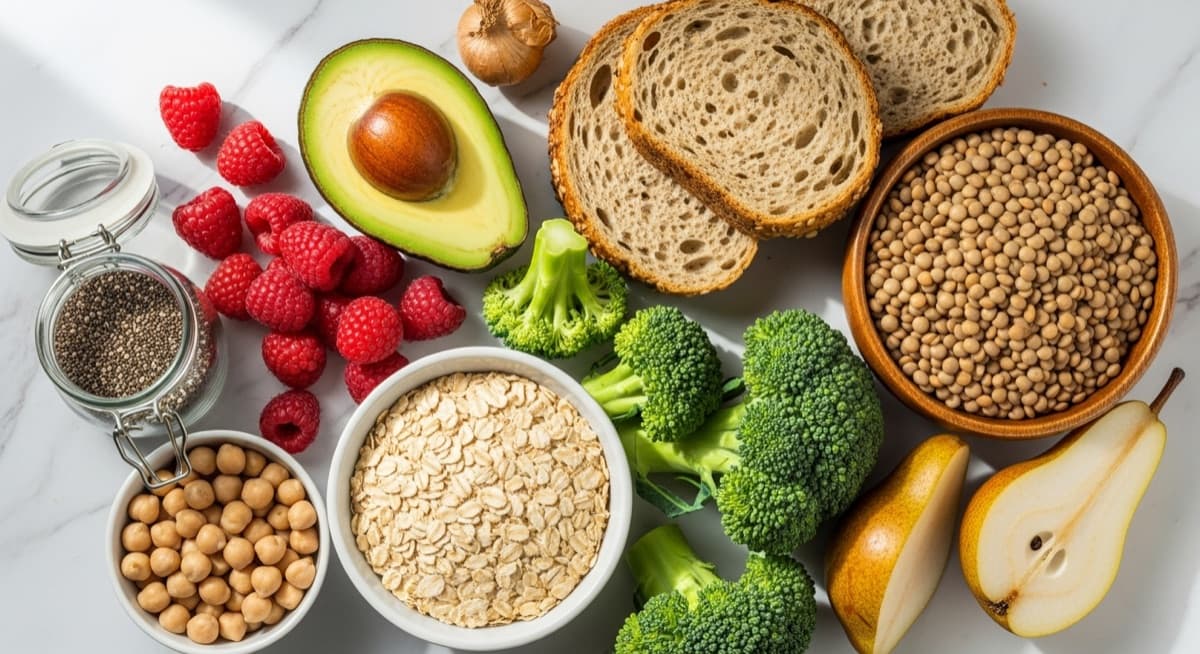
If you're looking to upgrade your gut health, energy, and weight management all at once, loading up on foods high in fiber is one of the highest-leverage moves you can make. This guide breaks down 40 of the best high-fiber foods across every food group — with real numbers on fiber content per serving — so you can start building better meals today.
Why Fiber Actually Matters (It's More Than Just Digestion)
Most people think of fiber as a digestion thing. It's a lot more than that.
Dietary fiber is a type of carbohydrate your body can't digest. Instead of being broken down for energy, it passes through your digestive system largely intact — and along the way, it does a surprising amount of work:
- Slows glucose absorption → more stable blood sugar, fewer energy crashes
- Feeds gut bacteria → a diverse microbiome is linked to better immunity and mood
- Increases satiety → you feel full longer, which helps with calorie control
- Lowers LDL cholesterol → soluble fiber binds to bile acids in the gut
- Bulks stool and speeds transit → relieves constipation and may reduce colorectal cancer risk
There are two main types:
Soluble Fiber
Dissolves in water to form a gel-like substance. Found in oats, beans, apples, and psyllium husk. Especially good for blood sugar and cholesterol management.
Insoluble Fiber
Does not dissolve in water. Found in wheat bran, nuts, and most vegetables. Adds bulk to stool and helps food move through the gut efficiently.
Most high-fiber foods contain both types in varying ratios — which is why eating a variety of whole foods beats any single supplement.
Pro tip: If you dramatically increase fiber intake overnight, you'll likely experience gas and bloating. Add high-fiber foods gradually over 2–3 weeks and drink plenty of water. Your gut bacteria need time to adapt.
Foods High in Fiber: Legumes & Beans
Legumes are the undisputed fiber kings. They're also packed with plant-based protein, making them one of the most nutritious food categories on the planet.
- Lentils — ~15g fiber per cooked cup; also ~18g protein. Red, green, or black — all excellent.
- Black beans — ~15g fiber per cooked cup; rich in anthocyanins (antioxidants).
- Chickpeas (garbanzo beans) — ~12g fiber per cooked cup; versatile in salads, soups, curries.
- Split peas — ~16g fiber per cooked cup; make an easy split pea soup.
- Kidney beans — ~13g fiber per cooked cup; classic chili staple.
- Navy beans — ~19g fiber per cooked cup; one of the highest-fiber foods that exists.
- Edamame — ~8g fiber per cup; also ~17g protein; great as a snack or in grain bowls.
- Pinto beans — ~15g fiber per cooked cup; excellent in burritos and rice dishes.
Tip: Canned beans are just as nutritious as dried — rinse well to reduce sodium by up to 40%.
Foods High in Fiber: Whole Grains
Swapping refined grains for whole grains is one of the simplest high-fiber upgrades you can make.
- Rolled oats / oatmeal — ~4g fiber per cooked cup; beta-glucan specifically supports cholesterol levels.
- Barley — ~6g fiber per cooked cup; slow-digesting, great in soups and grain bowls.
- Whole wheat pasta — ~6g fiber per cooked cup vs. ~2g in white pasta.
- Brown rice — ~3.5g fiber per cooked cup; mild flavor, easy swap from white rice.
- Bulgur wheat — ~8g fiber per cooked cup; cooks in 10 minutes; the base for tabbouleh.
- Quinoa — ~5g fiber per cooked cup; a complete protein, also gluten-free.
- Farro — ~8g fiber per cooked cup; nutty, chewy, excellent in meal-prep grain bowls.
Foods High in Fiber: Vegetables
Most Americans eat far too few vegetables — and fiber is one of the biggest reasons that gap costs them.
Cruciferous Vegetables
- Artichokes — ~10g fiber per medium artichoke; one of the highest-fiber vegetables.
- Green peas — ~9g fiber per cooked cup; sweet, kid-friendly, easy to add to anything.
- Broccoli — ~5g fiber per cooked cup; also a good source of vitamin C and sulforaphane.
- Brussels sprouts — ~4g fiber per cooked cup; roast with olive oil and garlic.
- Cauliflower — ~3g fiber per cup; versatile — rice it, roast it, or blend into soups.
Root & Other Vegetables
- Acorn squash — ~9g fiber per cooked cup; naturally sweet, great for fall meal prep.
- Sweet potato (with skin) — ~4g fiber per medium potato; also rich in beta-carotene.
- Carrots — ~3.5g fiber per cup; easy snack, high in vitamin A.
- Kale — ~2.5g fiber per raw cup; also loaded with vitamin K, calcium, and iron.
Foods High in Fiber: Fruits
Fresh and dried fruits bring fiber alongside natural sugars, vitamins, and antioxidants — a winning combo for a smart snack.
- Avocado — ~10g fiber per cup of sliced avocado; also rich in heart-healthy monounsaturated fats.
- Guava — ~9g fiber per cup; tropical, underrated, and extremely nutrient-dense.
- Raspberries — ~8g fiber per cup; one of the highest-fiber fruits by volume; perfect for breakfast bowls.
- Blackberries — ~7.6g fiber per cup; also high in vitamin C and antioxidants.
- Pears (with skin) — ~5.5g fiber per medium pear; most of the fiber lives in the skin.
- Apples (with skin) — ~4.5g fiber per medium apple; pectin (soluble fiber) helps with satiety.
- Pomegranate seeds — ~7g fiber per cup; the arils also pack polyphenols.
- Dried figs — ~7.5g fiber per ½ cup; calorie-dense, so portion accordingly.
- Prunes — ~6g fiber per ½ cup; well-known gut-motility aid, and it works.
- Kiwi — ~5g fiber per 2 fruits; also high in vitamin C and gut-friendly actinidin enzyme.
Foods High in Fiber: Nuts, Seeds & Other Sources
Don't overlook these calorie-efficient fiber sources — small servings pack real value.
- Chia seeds — ~10g fiber per 2 tbsp; mostly soluble fiber; absorb up to 12× their weight in water.
- Flaxseeds (ground) — ~4g fiber per 2 tbsp; grind them for bioavailability; also rich in omega-3s.
- Almonds — ~3.5g fiber per ounce (~23 almonds); also high in vitamin E and magnesium.
- Pistachios — ~3g fiber per ounce; one of the highest-protein nuts and a solid prebiotic source.
- Dark chocolate (70%+) — ~3g fiber per ounce; yes, really — not an excuse to eat the whole bar.
- Psyllium husk — ~7g fiber per tablespoon; a concentrated supplement option, but whole foods first.
How Much Fiber Do You Actually Need?
General dietary guidelines recommend:
- Women: ~25g per day
- Men: ~38g per day
- Adults 51+: ~21g (women) / 30g (men) per day
Most people in Western countries consume roughly half of these targets. The gap is real — and the consequences (higher rates of constipation, blood sugar instability, and cardiovascular risk) are well-documented.
Simple daily fiber targets you can hit:
- Breakfast: oatmeal with raspberries + chia seeds → ~15g
- Lunch: grain bowl with farro, black beans, roasted broccoli → ~20g
- Snack: apple with almond butter → ~6g
- Dinner: lentil soup + whole grain bread → ~20g
That's a realistic 60g day if you're deliberate about it — but even consistently hitting 30g is a meaningful improvement for most people.
Use the LifeBar AI macro calculator to see how fiber fits into your daily nutrition targets — it breaks down your full macro picture in seconds.
If you have a digestive condition like IBS, Crohn's disease, or diverticulitis, consult a registered dietitian before significantly changing your fiber intake, as high-fiber approaches can sometimes worsen certain GI conditions.
Practical Ways to Eat More Foods High in Fiber Every Day
Knowing the list isn't enough — you need to actually get these foods into your daily routine.
- Swap white for whole: whole wheat pasta, brown rice, whole grain bread. Takes zero extra effort.
- Add beans to everything: toss chickpeas into salads, blend white beans into pasta sauce, add lentils to ground meat dishes.
- Snack on fruit + nuts: an apple and a handful of almonds hits 7–8g fiber in one move.
- Chia seed trick: stir 2 tbsp into yogurt or overnight oats the night before. Done.
- Don't peel your produce: most of the fiber in apples, pears, potatoes, and cucumbers lives in the skin.
- Meal prep legumes: cook a big batch of lentils or chickpeas on Sunday — they stay good for 5 days and go into anything.
- Use frozen vegetables: frozen peas, edamame, and spinach are as nutritious as fresh and require zero prep.
Track your actual fiber intake with LifeBar AI — snap a photo of your meal and get an instant fiber and macro breakdown so you know exactly where you stand each day.
Frequently Asked Questions
What are the highest fiber foods I can eat?
Navy beans, split peas, and lentils top the list with 15–19g of fiber per cooked cup. Among fruits, avocado (~10g per cup) and raspberries (~8g per cup) are standouts. Chia seeds deliver ~10g in just 2 tablespoons. For practical daily use, legumes and whole grains give you the most fiber per calorie.
Can you eat too much fiber?
Yes. Jumping too fast can cause gas, bloating, and cramping. Increase gradually over 2–3 weeks and drink plenty of water. Staying within 50–70g per day is generally appropriate for most healthy adults. If you have a digestive condition, speak to a doctor first.
Is fiber a carbohydrate?
Technically yes — fiber is classified as a carbohydrate. But unlike starches and sugars, it isn't digested for energy and doesn't spike blood glucose. That's why "net carbs" subtracts fiber from total carbs, and high-fiber foods fit well into lower-carb eating patterns.
Does cooking destroy fiber?
Cooking can slightly reduce certain fiber types, but the overall content of cooked vegetables and legumes remains substantial. The reduction from typical home cooking is not meaningful enough to worry about.
Are fiber supplements as good as whole foods?
Supplements like psyllium husk have real clinical support for cholesterol and blood sugar benefits, but they don't replicate the full nutritional package of whole foods: vitamins, minerals, antioxidants, and prebiotic diversity. Useful backup, not a replacement.
The Bottom Line
Foods high in fiber are genuinely some of the most powerful nutrition tools available — they improve digestion, stabilize blood sugar, support heart health, and help you eat less without trying. The 40 foods on this list span every food category, so there's no excuse not to find options you actually enjoy eating.
Start small: add one or two new high-fiber foods per week. Track your progress, notice how your energy and digestion respond, and build from there.
To make it easy to track your fiber intake without logging every ingredient manually, try LifeBar AI — snap a photo of any meal and get an instant, detailed nutrition breakdown including fiber, macros, and micronutrients. Your gut will thank you.