
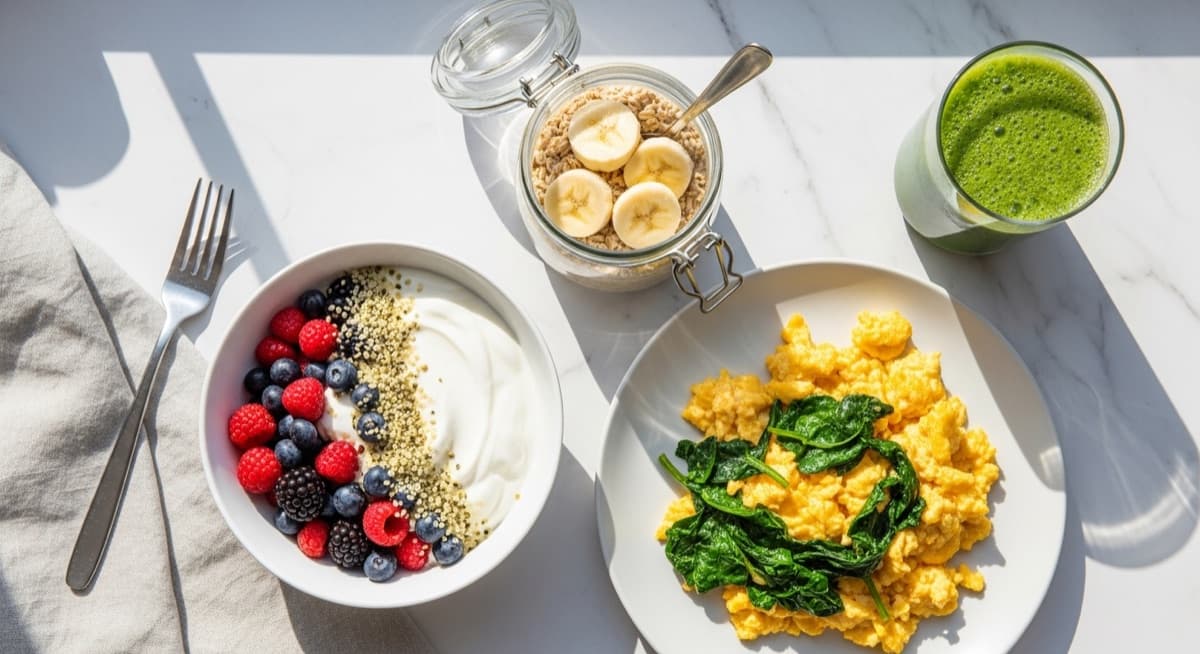
Starting your morning with a high protein breakfast is one of the most evidence-backed habits for controlling hunger, maintaining muscle, and staying energized through the morning. Below you'll find 15 genuinely satisfying options — ranging from two-minute fixes to weekend-worthy recipes — with protein counts, key ingredients, and tips you can use today.
Why Protein at Breakfast Actually Matters
Protein is the most satiating macronutrient. It triggers the release of satiety hormones (PYY, GLP-1) and suppresses ghrelin — the hunger hormone — more effectively than carbs or fat gram-for-gram. Starting the day with a high-protein meal helps blunt the mid-morning blood sugar crash that drives snacking before noon.
Beyond hunger, morning protein supports:
- Muscle protein synthesis — your muscles respond to protein throughout the day, not just post-workout
- Metabolic rate — protein has the highest thermic effect of food (~20–30% of its calories burned in digestion)
- Cognitive focus — amino acids are precursors to neurotransmitters like dopamine and serotonin
Most adults benefit from 25–40 g of protein at breakfast — a range that research consistently links to improved satiety compared to lower-protein morning meals. If you're unsure of your personal target, check your numbers with our macro calculator.
Pro tip: Pair protein with at least 5–8 g of fiber at breakfast. Fiber slows gastric emptying, extending the satiety window even further. Think eggs + vegetables, Greek yogurt + berries, or cottage cheese + fruit.
High-Protein Breakfast Options: The Full List
1. Greek Yogurt Parfait
~17–20 g protein per cup of plain full-fat or 2% Greek yogurt. Layer with mixed berries (~3 g fiber) and a tablespoon of chia seeds (+2 g protein, +5 g fiber). Takes 2 minutes. Choose plain varieties to avoid added sugar.
2. Scrambled Eggs with Cottage Cheese
~25 g protein from 3 large eggs (~18 g) plus ¼ cup cottage cheese (~7 g), folded in during cooking. The curds blend in invisibly and make eggs creamier. Add spinach for iron and folate.
3. Smoked Salmon & Cream Cheese on Whole-Grain Toast
~22 g protein from 3 oz smoked salmon (~17 g) and 2 tbsp cream cheese (~2 g) on a slice of whole-grain bread (~3 g). Salmon also delivers omega-3 fatty acids and vitamin D. Finish with capers and thin cucumber slices.
4. Protein Overnight Oats
~30 g protein when made with ½ cup rolled oats, 1 cup plain Greek yogurt, and a scoop of unflavored or vanilla protein powder. Stir together the night before, refrigerate, top with banana slices in the morning. Oats contribute ~4 g fiber per ½ cup.
5. Egg White & Veggie Omelette
~24 g protein from 6 egg whites (~21 g) filled with sautéed bell pepper, onion, mushrooms, and a sprinkle of feta (~3 g). Egg whites are essentially pure protein with very little fat, making this ideal if you're watching overall calories.
6. Cottage Cheese Bowl
~25 g protein per cup of low-fat cottage cheese. Eat it savory (everything bagel seasoning, sliced cherry tomatoes, olive oil) or sweet (pineapple chunks, a drizzle of honey). One of the fastest high-protein breakfasts in existence — zero cooking required.
7. Turkey Breakfast Burrito
~30–35 g protein from 2 oz lean ground turkey (~15 g), 2 scrambled eggs (~12 g), and a whole-wheat tortilla (~4 g). Add black beans for an extra ~4 g protein and ~6 g fiber. Prep a batch on Sunday and microwave all week.
8. Skyr (Icelandic Yogurt) with Hemp Seeds
~22–25 g protein from 1 cup plain skyr (~17–19 g) plus 3 tbsp hemp seeds (~10 g). Hemp seeds also deliver all essential amino acids and a good ratio of omega-6 to omega-3 fats. Top with frozen mango chunks for vitamin C.
9. Edamame & Egg Fried Rice (Leftover Hack)
~28 g protein from 1 cup shelled edamame (~17 g) and 2 eggs (~12 g) stir-fried with leftover brown rice, soy sauce, and sesame oil. Takes under 5 minutes. Edamame is one of the few complete plant proteins.
10. Smoked Turkey & Egg Muffins (Meal Prep)
~20 g protein per 2 muffins — whisk 6 eggs with diced smoked turkey, spinach, and shredded mozzarella, pour into a muffin tin, bake at 350°F for 18–20 minutes. Makes 12 muffins. Store in the fridge up to 5 days; microwave 45 seconds each morning.
11. Peanut Butter Banana Protein Smoothie
~30–35 g protein from 1 cup unsweetened soy milk (~8 g), 1 scoop protein powder (~20–25 g), 2 tbsp natural peanut butter (~8 g), and half a frozen banana. Blend 60 seconds. Soy milk is the best plant-based milk for protein, roughly equivalent to cow's milk.
12. Lox & Egg Scramble
~30 g protein from 2 oz lox (~11 g) and 3 whole eggs (~18 g), scrambled together with fresh dill and a handful of arugula wilted in. Serve on its own or over a slice of rye bread. Fast, restaurant-quality, genuinely filling.
13. High-Protein Avocado Toast
~24–28 g protein when you top 2 slices of whole-grain bread with ½ avocado (~2 g), 2 poached or fried eggs (~12 g), and 2 tbsp everything-seasoning cream cheese (~2 g). Sprinkle hemp seeds or pumpkin seeds for an easy protein boost.
14. Tofu Scramble (Plant-Based Power)
~20–22 g protein from 6 oz firm tofu crumbled and cooked with turmeric, smoked paprika, nutritional yeast, and diced vegetables. Nutritional yeast adds ~4 g protein per 2 tbsp plus a savory, cheesy flavor. A genuinely satisfying vegan alternative to scrambled eggs.
15. Baked Beans on Toast (Underrated Classic)
~18–22 g protein from ¾ cup canned low-sugar baked beans (~9 g protein, ~7 g fiber) on 2 slices of seeded whole-grain bread (~6 g). Beans are one of the most fiber-dense, cost-effective protein sources available. Grate a little sharp cheddar on top to push protein higher.
How to Build a High-Protein Breakfast Habit
The best breakfast is the one you'll actually eat consistently. A few practical systems:
- Anchor protein to what you already do. Already make coffee? Blend a protein shake while it brews. Already meal prep dinners? Double the batch and save some for morning bowls.
- Keep ready-to-eat proteins in the fridge. Hard-boiled eggs, Greek yogurt, cottage cheese, and smoked salmon require zero morning effort.
- Batch cook on Sundays. Egg muffins, overnight oats, and breakfast burritos all keep 4–5 days refrigerated.
- Track your macros once to calibrate. A week of logging teaches you which meals actually hit your targets — and which "protein-rich" breakfasts turn out to be mostly carbs. LifeBar AI does this with a photo snap, no manual entry required.
What If You're Not Hungry in the Morning?
Appetite suppression in the morning is common — especially if you had a large dinner late at night or practice intermittent fasting. You don't have to force a full meal. Options:
- A protein shake (~25 g protein in under 60 seconds) is better than skipping if you're in a rush
- Smaller, denser options like cottage cheese (½ cup, ~12 g protein) or a couple of hard-boiled eggs work well as a "bridge" until appetite increases
- If you're consistently not hungry until midday, that's fine — focus on total daily protein rather than rigidly timing all of it at breakfast
If you're considering significant dietary changes — especially for medical conditions, athletic performance, or weight management — it's worth a conversation with a registered dietitian or your doctor to personalize your approach.
Frequently Asked Questions
How much protein should I eat at breakfast?
Research suggests 25–40 g at breakfast maximizes satiety for most adults. That said, individual needs vary based on body weight, activity level, and goals. A common starting point is 0.7–1 g of protein per pound of bodyweight spread across 3–4 meals daily. Use our macro calculator to estimate your personal target.
Can I hit 30 g of protein without eggs or dairy?
Yes. Tofu, edamame, tempeh, protein powder (pea, rice, or soy-based), hemp seeds, nutritional yeast, and beans are all solid plant-based protein sources. The key is combining several in one meal — e.g., a tofu scramble with beans and hemp seeds can easily reach 28–32 g.
Is a high protein breakfast good for weight loss?
Higher protein intake is consistently associated with reduced calorie intake later in the day due to improved satiety. It also helps preserve lean muscle mass during a calorie deficit, which matters for long-term metabolic health. It's not a magic lever, but it's one of the most well-supported dietary habits for body composition.
Does cooking reduce protein content in eggs?
Cooking eggs actually improves protein bioavailability compared to eating them raw. Raw egg whites contain avidin, a protein that blocks biotin absorption; cooking deactivates it. So scrambled, poached, boiled, or baked — all good.
What's the fastest high-protein breakfast with no cooking?
Cottage cheese straight from the container: 1 cup of low-fat cottage cheese delivers roughly 25 g of protein with zero prep time. Greek yogurt is a close second. Add fruit or seeds if you have 30 extra seconds.
The Bottom Line
A high protein breakfast doesn't have to be complicated — it just has to be intentional. Whether you're reaching for Greek yogurt and hemp seeds on a busy Monday or making a smoked salmon scramble on a slow Sunday, the payoff is real: fewer cravings, more sustained energy, and better muscle support through the day.
The trickiest part isn't knowing what to eat — it's actually knowing how much protein you're getting. LifeBar AI makes it frictionless: snap a photo of your breakfast and get an instant macro breakdown so you always know where you stand, no spreadsheets required.