If you've been struggling to lose weight despite cutting calories, a high protein diet for weight loss might be the missing piece — and the science behind it is surprisingly compelling. In this guide, you'll learn exactly why protein drives fat loss, how much you need, the best foods to eat, and a full 7-day meal plan to get started today.
Why Protein Is the Most Powerful Macronutrient for Weight Loss
Not all calories behave the same way inside your body. Protein has three distinct advantages over carbs and fat when it comes to shedding weight.
It Burns More Calories to Digest
Protein has a higher thermic effect of food (TEF) than either carbs or fat. Roughly 20–30% of the calories in protein are burned just during digestion and metabolism. Carbs cost about 5–10% and fat only 0–3%. That means a 200-calorie chicken breast effectively delivers fewer net calories than 200 calories of white rice.
It Keeps You Fuller, Longer
Protein triggers the release of satiety hormones — particularly GLP-1 and peptide YY — while simultaneously suppressing ghrelin, the hunger hormone. The practical result: you eat less without white-knuckling it through cravings.
It Protects Lean Muscle During a Deficit
When you eat fewer calories, your body can burn muscle for fuel. High protein intake signals your body to preserve that muscle tissue and preferentially burn fat instead. More muscle = higher resting metabolic rate = more calories burned at rest, even while sleeping.
How Much Protein Do You Actually Need on a High Protein Diet for Weight Loss?
General dietary guidelines suggest a minimum of 0.8 g of protein per kilogram of body weight per day — but that floor is designed to prevent deficiency, not to optimize fat loss.
For active weight loss, most sports nutrition and clinical nutrition research points to a range of 1.6–2.2 g per kilogram of body weight per day (roughly 0.7–1.0 g per pound). If you weigh 75 kg (165 lbs), that's approximately 120–165 g of protein daily.
Practical targets by goal:
- Sedentary adult losing weight: aim for ~1.6 g/kg
- Active adult (gym 3–5x/week) losing weight: aim for ~2.0 g/kg
- Older adults (50+): lean toward the higher end to offset age-related muscle loss
Pro tip: Spread your protein across at least 3–4 meals rather than loading it all into one sitting. Older research suggested muscles can only use roughly 30–40 g of protein per meal for muscle protein synthesis, though more recent work suggests the ceiling may be higher — either way, distributing intake throughout the day consistently supports better results than loading it all at once.
The Best High-Protein Foods to Stock
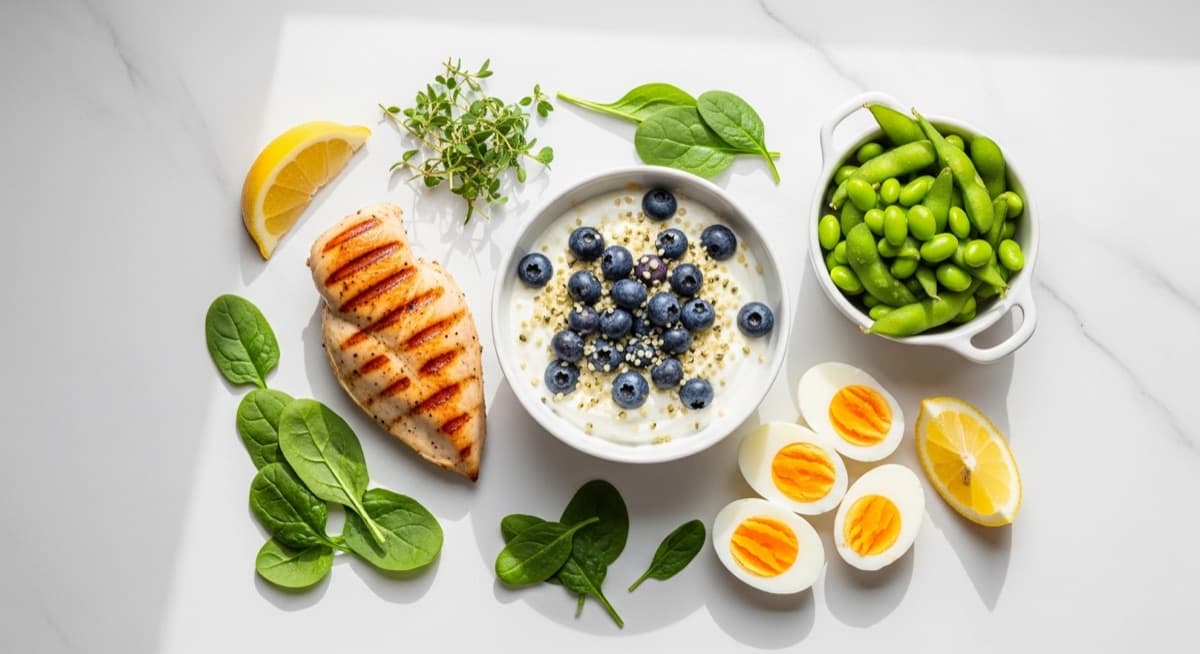
You don't need exotic supplements. These whole foods do the heavy lifting.
Animal Sources
- Chicken breast (skinless, 100 g cooked): ~31 g protein, ~165 calories — lean and versatile
- Canned tuna in water (85 g / 3 oz): ~22 g protein, ~100 calories — fastest prep time of any protein source
- Greek yogurt, plain non-fat (170 g / 6 oz): ~17 g protein, ~100 calories — doubles as a gut-friendly probiotic
- Eggs (2 large): ~12 g protein, ~140 calories — the gold standard for bioavailability
- Cottage cheese, low-fat (½ cup / 113 g): ~14 g protein, ~90 calories — slow-digesting casein makes it ideal before bed
- Salmon (100 g cooked): ~25 g protein, plus omega-3 fatty acids for inflammation control
- Lean beef (95% lean ground, 100 g cooked): ~26 g protein, ~180 calories — also high in iron and B12
Plant Sources
- Lentils (1 cup cooked): ~18 g protein, ~16 g fiber — fiber slows digestion and compounds satiety
- Edamame (1 cup shelled): ~17 g protein, complete amino acid profile
- Tempeh (100 g): ~19 g protein — fermented for better gut absorption than tofu
- Black beans (1 cup cooked): ~15 g protein, ~15 g fiber
- Hemp seeds (3 tbsp / 30 g): ~10 g protein, also provides omega-3s and omega-6s
Use a macro calculator to find the right protein target for your specific weight, height, and activity level before building your plan.
How to Build a High-Protein Plate
Every meal should follow a simple framework:
- Anchor with protein first — fill roughly a quarter of your plate with a lean protein source
- Load vegetables — non-starchy veggies (broccoli, spinach, peppers, zucchini) should take up half the plate; they add volume, fiber, and micronutrients with minimal calories
- Add smart carbs and fats — the remaining quarter: legumes, quinoa, sweet potato, or a drizzle of olive oil and a handful of nuts
This ratio naturally lands most people in a moderate calorie deficit without requiring obsessive counting.
7-Day High Protein Meal Plan for Weight Loss
This plan targets roughly 140–160 g of protein and 1,600–1,900 calories per day — adjust portions to your personal target.
Day 1
- Breakfast: Greek yogurt parfait — 170 g plain non-fat Greek yogurt, ½ cup mixed berries, 2 tbsp hemp seeds (~27 g protein)
- Lunch: Tuna lettuce wraps — 2 cans tuna, avocado, diced tomato, romaine leaves (~44 g protein)
- Dinner: Baked salmon fillet with roasted broccoli and ½ cup quinoa (~38 g protein)
- Snack: Cottage cheese + sliced cucumber (~14 g protein)
Day 2
- Breakfast: 3-egg scramble with spinach, bell peppers, and a sprinkle of feta (~22 g protein)
- Lunch: Grilled chicken breast over a big greens salad with chickpeas, olive oil, and lemon (~42 g protein)
- Dinner: Lean beef stir-fry with bok choy, snap peas, and brown rice (~35 g protein)
- Snack: Hard-boiled egg + apple (~7 g protein)
Day 3
- Breakfast: Protein smoothie — 1 cup unsweetened almond milk, 1 scoop whey or pea protein, frozen spinach, banana (~28 g protein)
- Lunch: Lentil and vegetable soup (homemade or low-sodium canned), 1 slice whole grain bread (~22 g protein)
- Dinner: Tempeh and vegetable sheet pan bake with sweet potato (~30 g protein)
- Snack: Edamame (~17 g protein)
Day 4
- Breakfast: Cottage cheese bowl with sliced banana, a sprinkle of cinnamon, and a handful of walnuts (~18 g protein)
- Lunch: Grilled chicken and roasted vegetable grain bowl with quinoa and tahini dressing (~40 g protein)
- Dinner: Baked cod with steamed green beans and roasted sweet potato (~32 g protein)
- Snack: 2 hard-boiled eggs with cherry tomatoes (~12 g protein)
Day 5
- Breakfast: Overnight oats made with Greek yogurt, chia seeds, unsweetened almond milk, and sliced almonds (~22 g protein)
- Lunch: Black bean and veggie burrito bowl — brown rice, black beans, salsa, shredded cabbage, and a dollop of low-fat Greek yogurt (~26 g protein)
- Dinner: Lemon herb skinless chicken thigh with roasted asparagus and farro (~38 g protein)
- Snack: Edamame (~17 g protein)
Day 6
- Breakfast: 3-egg veggie omelette with mushrooms, diced onion, and low-fat cheese (~24 g protein)
- Lunch: Tuna and white bean salad over mixed greens with olive oil and lemon juice (~40 g protein)
- Dinner: Tempeh stir-fry with snap peas, shredded carrots, and brown rice in a light soy-ginger sauce (~30 g protein)
- Snack: Plain non-fat Greek yogurt with a drizzle of honey (~17 g protein)
Day 7
- Breakfast: Protein smoothie — unsweetened almond milk, 1 scoop pea protein, frozen mixed berries, 1 tbsp almond butter (~30 g protein)
- Lunch: Lean beef lettuce tacos — 95% lean ground beef, black beans, diced tomato, shredded cabbage, lime (~42 g protein)
- Dinner: Baked salmon with roasted broccoli and cauliflower rice (~35 g protein)
- Snack: Cottage cheese with sliced peach (~14 g protein)
Common Mistakes That Stall High-Protein Weight Loss
- Relying only on protein bars and shakes — convenient but often high in added sugar; keep whole foods as your foundation
- Not eating enough total food — severe restriction backfires by triggering muscle loss and metabolic slowdown; protein helps, but you still need sufficient total calories for hormonal health
- Ignoring fiber — protein and fiber work synergistically for satiety; pair high-protein foods with fibrous vegetables and legumes
- Drinking calories — fruit juices, sweetened coffees, and alcohol quietly erase the calorie savings that protein provides
- Skipping breakfast — front-loading protein earlier in the day tends to reduce total intake across the day for most people
Tracking Makes the Difference
Most people underestimate how much protein they actually eat — by a wide margin. Logging your food, even loosely, exposes the gap between your intention and reality. The easiest way to do it? Snap a photo with LifeBar AI, which instantly breaks down protein, calories, carbs, and fat from any meal — no barcode scanning or manual data entry required.
Frequently Asked Questions
Is a high protein diet safe for kidneys?
For healthy adults with no pre-existing kidney disease, the evidence consistently shows that higher protein intakes are safe. The concern about protein damaging kidneys originated from studies on people who already had kidney disease, where the kidneys struggle to filter protein waste products. If you have a history of kidney issues, consult your doctor before significantly increasing protein intake.
Can I lose weight on a high protein diet without exercising?
Yes — protein increases satiety and raises your metabolic rate through TEF, which can produce a calorie deficit even without exercise. That said, combining a high protein diet with resistance training (even 2–3 sessions per week) dramatically accelerates fat loss by preserving and building lean muscle, which burns more calories at rest.
How quickly will I see results on a high protein diet for weight loss?
Individual results vary, but many people notice reduced hunger and less bloating within the first 1–2 weeks. Measurable weight changes typically appear within 2–4 weeks when protein intake is paired with a modest calorie deficit. Sustainable fat loss averages 0.5–1 kg (1–2 lbs) per week.
Do I need protein supplements?
Whole foods should be your primary protein source. Protein powders (whey, casein, pea, rice) are convenient tools to fill gaps — particularly useful post-workout or on hectic days — but they're not essential. If you can hit your target through food alone, skip the supplements.
Will eating more protein make me bulky?
No. Getting noticeably bigger from protein alone requires a sustained calorie surplus plus years of progressive resistance training. On a weight-loss diet, higher protein helps you become leaner — more defined, not larger. Women in particular often worry about this unnecessarily; hormonal differences make significant muscle gain naturally quite difficult.
The Bottom Line
A high protein diet for weight loss works through three compounding mechanisms: it burns more calories during digestion, suppresses hunger hormones, and protects lean muscle so your metabolism stays high as the scale drops. You don't need a complicated system — anchor every meal with a quality protein source, load up on vegetables, and stay consistent.
As always, before making major changes to your diet — especially if you have any underlying health conditions — check in with a registered dietitian or your primary care physician to make sure the approach is right for you.
Ready to put this into practice? LifeBar AI makes it effortless to track your protein and macros every day — just snap a photo of your meal and get an instant, accurate breakdown.