
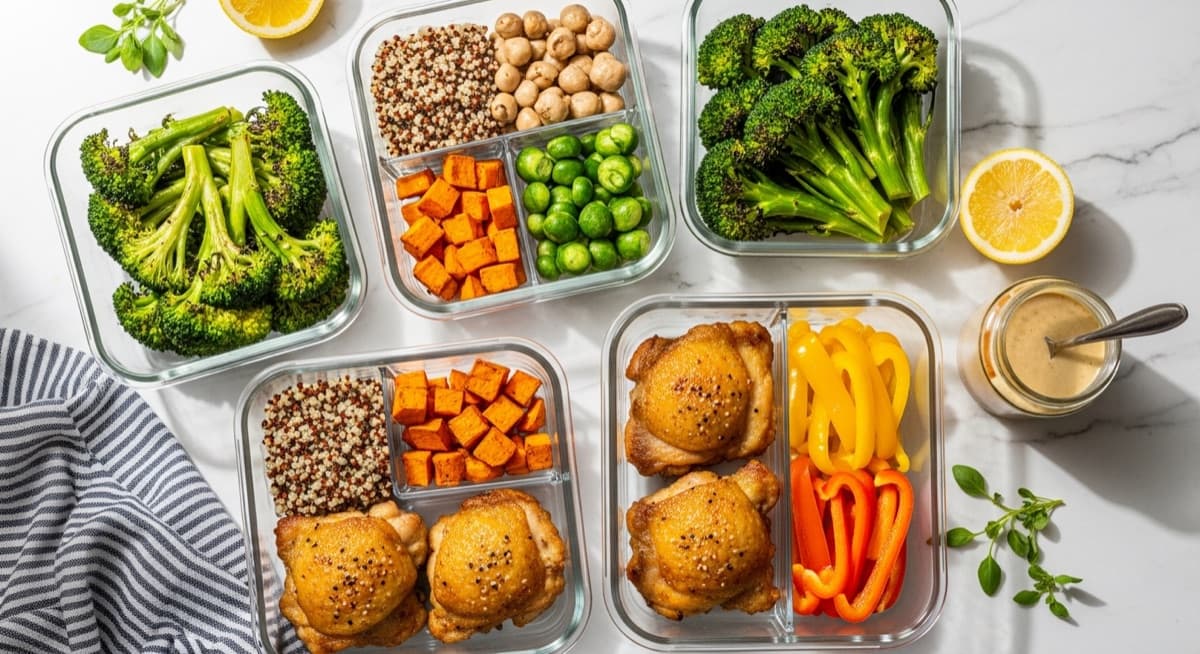
If you've ever stared into your fridge on a Wednesday night wondering what to eat, meal prep ideas are about to change your week. This beginner's guide walks you through exactly how to plan, prep, and store a full week of healthy meals — without spending your entire Sunday in the kitchen or eating the same sad salad every day.
Why Meal Prep Actually Works (And Why Most Beginners Quit)
The research is pretty clear: when healthy food is ready and waiting, you eat it. When it's not, you order pizza. Meal prep removes the friction between intention and action.
But most beginners quit by week three because they over-commit. They prep 14 identical containers of brown rice and grilled chicken, get bored by Tuesday, and throw in the towel. The fix isn't more willpower — it's a smarter system.
A sustainable approach means:
- Prepping components, not full meals — cook proteins, grains, and veggies separately, then mix and match
- Keeping variety — two proteins, two grains, three veggie options give you 12 different combinations
- Spending 60–90 minutes max — if it takes longer, you'll skip it next week
The Meal Prep Ideas That Actually Make It Into Your Routine
Here's the truth: the best meal prep is the one you'll actually do. Start with five categories and pick one option from each.
Proteins (cook in bulk)
- Baked chicken thighs — season with olive oil, garlic, paprika; bake at 400°F for 25 minutes. ~25g protein per thigh, stays moist in the fridge for 4 days
- Hard-boiled eggs — 6g protein each, zero active cook time, versatile for breakfast or snacks
- Canned chickpeas (rinsed) — ~7g protein and ~6g fiber per half cup; no cooking needed, great for grain bowls or wraps
- Ground turkey — brown with onion and taco seasoning; works in bowls, wraps, salads. ~22g protein per 3 oz
Grains & Carb Bases
- Brown rice — ~45g carbs and 3g fiber per cooked cup; cook a large batch in your rice cooker and it lasts 5 days
- Quinoa — complete protein (~8g per cup cooked), ready in 15 minutes, lighter texture than rice
- Sweet potato cubes — roast at 425°F for 20–25 minutes; naturally sweet, ~4g fiber per medium potato
Vegetables (roast or raw-prep)
- Roasted broccoli — 400°F, 20 minutes, olive oil and salt; ~2.5g fiber and ~2g protein per cup
- Shredded cabbage — raw, stays crisp all week in an airtight container, great base for slaws
- Sliced bell peppers — raw-prepped, ready for dipping or stir-fry; high in vitamin C
Sauces & Dressings (make one per week)
A good sauce rescues boring food. Try:
- Tahini lemon dressing — 2 tbsp tahini, juice of 1 lemon, garlic, salt, water to thin
- Peanut sauce — peanut butter, soy sauce, lime juice, honey, ginger
- Green goddess — Greek yogurt, fresh herbs, lemon, garlic; doubles as a dip
Snacks & Grab-and-Go Items
- Greek yogurt cups (portioned, ~15–17g protein per 5.3 oz serving)
- Pre-washed fruit (grapes, blueberries) in snack containers
- Mixed nuts portioned into small bags (~5g protein, ~14g healthy fats per oz)
A Simple Beginner Meal Prep Schedule
You don't need a perfectly choreographed routine. Here's one that takes about 75 minutes.
The Night Before (15 min)
- Decide on your two proteins and one grain
- Check that you have the ingredients
- Pull out sheet pans, containers, and your pot
Sunday Morning or Afternoon (60 min)
- 0:00 — Start grain (rice or quinoa) on the stove
- 0:05 — Season chicken and put in oven
- 0:15 — Chop vegetables; roast one tray alongside the chicken
- 0:30 — Mix your sauce while things cook
- 0:45 — Everything comes out; let cool for 10–15 min before portioning
- 1:00 — Portion into containers; label with day or meal
Pro tip: Let cooked food cool completely before sealing containers. Sealing hot food traps steam, which makes everything soggy and accelerates bacterial growth. A wire rack speeds this up.
What a Full Week Actually Looks Like
Here's a sample week built from one prep session using chicken thighs, quinoa, roasted broccoli, chickpeas, and tahini dressing.
Monday
- Breakfast: Greek yogurt + blueberries + a handful of nuts
- Lunch: Quinoa bowl with chicken, broccoli, tahini dressing
- Dinner: Chickpea and roasted veggie wrap with hummus
Tuesday–Wednesday
- Rotate the same components but rearrange: chicken over shredded cabbage with peanut sauce, quinoa as a side; chickpeas in a quick stir-fry with eggs
- Swap in a different sauce to make it feel different
Thursday
- By now you may need a fresh protein. Quick-cook option: canned tuna or rotisserie chicken (store-bought is completely fine and a legitimate time-saver)
- Swap sweet potatoes if you prepped them as a carb alternative
Friday
- Use up remaining veg in a scrambled egg bowl or grain salad
- This is your "use it up" day — prevents food waste
Meal Prep Ideas for Specific Goals
Your goals shape what you emphasize, though the general approach stays the same.
For Weight Loss
Focus on high-volume, high-fiber foods that fill your plate without excessive calories:
- Load up on roasted vegetables (broccoli, cauliflower, zucchini)
- Use a macro calculator to understand your protein and calorie targets before you prep
- Portion proteins carefully — measuring matters more than restriction
For Muscle Building
- Prioritize protein at every meal: aim for a palm-sized protein source per serving
- Include a carb with every meal to fuel workouts and support recovery
- Healthy fats (avocado, olive oil, nuts) support hormone function — don't cut them
For Busy Families
- Double every recipe and freeze half in labeled freezer bags
- Prep finger foods kids actually eat: mini meatballs, fruit skewers, cheese cubes
- Mason jar salads (dressing on the bottom) stay crisp for 3–4 days
*Note: If you have specific medical or dietary needs — diabetes, heart disease, food allergies — consult a registered dietitian before making major changes to your eating pattern.*
Food Safety: The Rules Nobody Talks About
Skipping this section is how people get sick and blame meal prep.
- Refrigerate within 2 hours of cooking
- Cooked proteins and grains: safe for 3–4 days in the fridge; freeze anything you won't eat by day 4
- Raw prepped vegetables: most last 4–5 days; cut avocado is the exception (1 day max)
- Label everything with the prep date — trust nothing unlabeled in a fridge after day 3
- Glass containers are better than plastic for reheating and don't absorb odors
Tracking Your Nutrition Without Losing Your Mind
Meal prep and nutrition tracking are a natural pair — when you cook your own food, you know exactly what's in it. But manually looking up every ingredient is tedious enough to kill the habit.
This is where LifeBar AI earns its keep: snap a photo of your meal prep spread or a single container, and it instantly estimates the macros and nutrients. No barcode scanning, no manual entry — just a photo. Over time, you can see patterns: which prep sessions hit your protein goal, where you're falling short on fiber, and how your choices stack up across the week.
Pairing your meal prep routine with real-time nutrition feedback closes the loop between planning and results.
Frequently Asked Questions
How long does meal prepped food last in the fridge?
Most cooked proteins (chicken, turkey, eggs) and grains (rice, quinoa) last 3–4 days refrigerated in airtight containers. Raw-prepped vegetables typically last 4–5 days. If you prep on Sunday, plan to use everything by Thursday and freeze any remainder over the weekend.
Do I need special containers for meal prep?
No special equipment required, but a few things help: glass containers with snap-lock lids are easier to reheat and don't stain. Standard 32 oz mason jars work well for grain salads. What matters most is that containers are airtight — this prevents moisture loss and keeps food fresh longer.
Can I meal prep if I don't like eating the same thing every day?
Absolutely — this is why the component prep method works better than prepping identical full meals. Cook separate proteins, grains, and vegetables; combine them differently each day. The same batch of chicken, quinoa, and roasted vegetables becomes a grain bowl on Monday and a wrap with hummus on Tuesday. One sauce swap completely changes the flavor profile.
Is meal prepping expensive?
It's almost always cheaper than not prepping. You buy ingredients in bulk, reduce food waste, and eliminate the daily spend on takeout or convenience food. Budget-friendly staples — eggs, canned legumes, frozen vegetables, whole grains — are some of the most nutritious foods available. A well-planned week of meal prep can cost significantly less per day than the average restaurant lunch.
How do I start if I've never meal prepped before?
Start with one meal, not all three. Pick lunch — it's the meal most people skip or buy out of convenience. Prep five lunches on Sunday: pick one protein, one grain, one vegetable, one sauce. Do it for two weeks before adding breakfast or dinner. Keeping the scope small ensures you actually do it instead of getting overwhelmed and abandoning the habit.
The Bottom Line
Meal prep ideas work because they solve the real problem: making the healthy choice the easy choice. Start with one hour, a handful of versatile ingredients, and the component method. Build the habit before you build complexity.
When you're ready to make your prep sessions even smarter, LifeBar AI lets you track exactly what's in every container — just snap a photo and get instant macro and nutrition data. No guesswork, no tedious logging, just clarity on what you're actually eating so you can dial in your results week by week.