
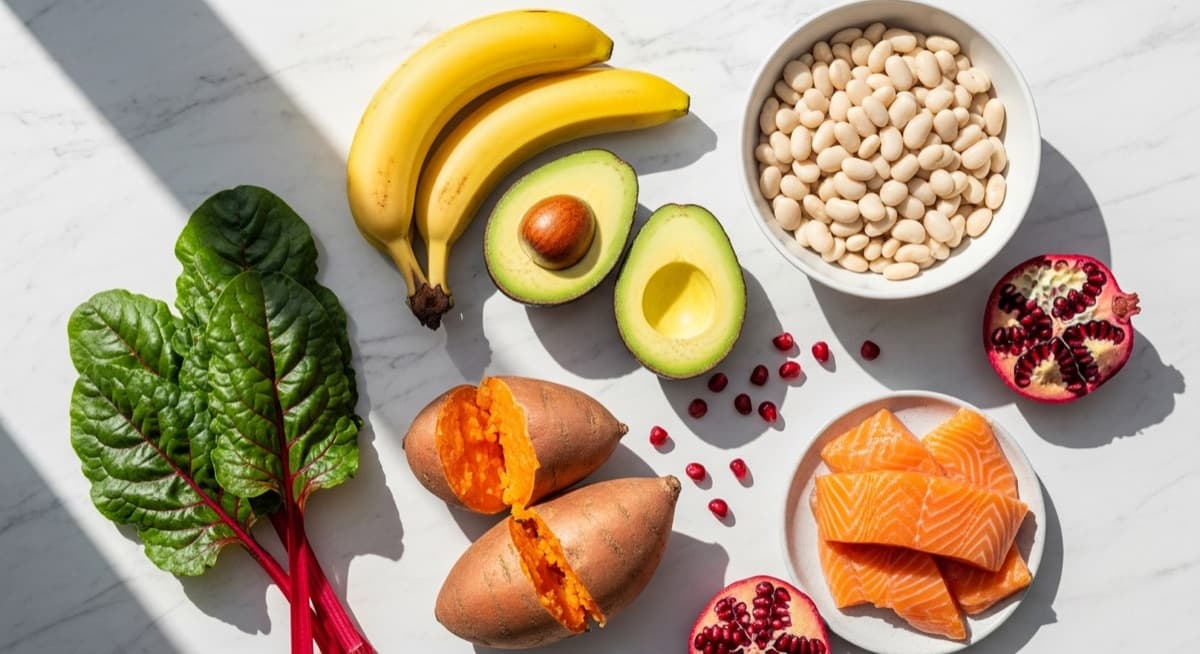
If you're not paying attention to foods high in potassium, you're leaving a critical mineral on the table — one that governs your heart rhythm, muscle contractions, and blood pressure around the clock. This guide gives you 30 of the best potassium-rich foods, exactly how much they deliver, and practical ways to work them into your day.
Why Potassium Matters More Than Most People Think
Potassium is an electrolyte, meaning it carries an electrical charge in your body's fluids. That charge is what lets your heart beat in rhythm, your muscles fire on demand, and your kidneys flush excess sodium. Most adults in the US fall well short of the recommended daily intake — which is roughly 2,600–3,400 mg for adults, depending on age and sex — making it one of the most commonly under-consumed nutrients.
Low potassium (hypokalemia) can show up as:
- Muscle cramps and weakness
- Fatigue that doesn't resolve with sleep
- Irregular heartbeat or palpitations
- Constipation
- Elevated blood pressure over time
The good news: fixing a potassium gap is almost always achievable through food alone, without supplements. If you have kidney disease or take certain medications, consult your doctor or a registered dietitian before significantly increasing potassium intake — the kidneys regulate excretion and certain conditions change this balance.
The 30 Best Foods High in Potassium
Fruits
- Avocado (1 cup, sliced) — ~700 mg potassium. Also packs healthy monounsaturated fats and about 10 g fiber. Slice it, mash it, or blend it into a smoothie.
- Banana (1 medium) — ~420 mg. The classic on-the-go option. Pairs perfectly with nut butter for a protein boost.
- Guava (1 cup) — ~690 mg. One of the highest-potassium fruits, plus roughly 9 g fiber and over 200% of daily vitamin C.
- Kiwi (2 medium) — ~560 mg. Small but dense; also high in vitamin K and folate.
- Pomegranate (1 cup arils) — ~410 mg. Loaded with antioxidants and about 7 g fiber.
- Prunes/dried plums (½ cup) — ~635 mg. Drying concentrates the potassium. Great in oatmeal or trail mix.
- Cantaloupe (1 cup diced) — ~430 mg. Low-calorie, hydrating, and easy to prep.
- Orange (1 large) — ~330 mg. Familiar source; also delivers vitamin C and folate.
- Jackfruit (1 cup) — ~740 mg. One of the highest-potassium fruits available; trending as a meat substitute.
- Dates (3–4 Medjool) — ~690 mg. Dense in natural sugar and potassium; perfect for pre-workout energy.
Vegetables
- Sweet potato (1 medium, baked) — ~540 mg. Also provides beta-carotene and about 4 g fiber. Leave the skin on for maximum benefit.
- White potato (1 medium, baked with skin) — ~900 mg. Gram for gram, one of the best potassium sources in any grocery store.
- Beet greens (1 cup cooked) — ~1,300 mg. Most people throw these away — don't. Sauté with garlic and olive oil.
- Swiss chard (1 cup cooked) — ~960 mg. Also delivers magnesium and vitamin K.
- Spinach (1 cup cooked) — ~840 mg. Raw spinach is good; cooked spinach is a potassium powerhouse.
- Acorn squash (1 cup baked) — ~900 mg. Hearty and versatile; roast it with cinnamon and a drizzle of olive oil.
- Butternut squash (1 cup cooked) — ~580 mg. Lower in potassium than acorn but still excellent, and widely available.
- Edamame (1 cup) — ~675 mg. Plus roughly 17 g plant protein and 8 g fiber in a single cup.
- Broccoli (1 cup cooked) — ~460 mg. Also packs vitamin C and sulforaphane, a compound studied for its anti-inflammatory properties.
- Tomato paste (¼ cup) — ~670 mg. Concentrated tomato is one of the stealthiest potassium sources in your pantry.
Legumes
- White beans (1 cup cooked) — ~1,000 mg. Also delivers around 17 g protein and 11 g fiber. Add to soups or mash as a spread.
- Adzuki beans (1 cup cooked) — ~1,220 mg. Common in East Asian cuisine; nutty flavor that holds up well in stews.
- Lentils (1 cup cooked) — ~730 mg. Fast-cooking (no soaking), budget-friendly, and rich in folate.
- Kidney beans (1 cup cooked) — ~715 mg. Chili staple. Pair with whole grains for a complete protein.
- Chickpeas/garbanzo beans (1 cup cooked) — ~480 mg. Roast them for a crunchy snack or blend into hummus.
Proteins & Dairy
- Atlantic salmon (3 oz cooked) — ~530 mg. Plus omega-3 fatty acids and high-quality protein (~22 g).
- Clams (3 oz cooked) — ~530 mg. Also one of the highest dietary sources of vitamin B12.
- Plain Greek yogurt (1 cup) — ~380–440 mg. Protein-dense (up to 20 g), probiotic, and easy to customize.
- Whole milk (1 cup) — ~370 mg. Often overlooked; also provides calcium, vitamin D, and phosphorus.
- Chicken breast (3.5 oz cooked) — ~330 mg. Lower than the other proteins listed but still a meaningful contribution to your daily total.
Pro tip: Cooking method matters. Boiling vegetables leaches potassium into the water — steaming, roasting, or microwaving retains significantly more. If you do boil, keep the cooking water and use it as a stock base.
How to Build a High-Potassium Day Without Overthinking It
You don't need to eat all 30 foods. You need a few anchors. Here's what a simple high-potassium day looks like:
- Breakfast: Greek yogurt + banana + a handful of prunes = ~1,200 mg
- Lunch: Lentil soup with spinach and a slice of whole-grain bread = ~950 mg
- Snack: Avocado on whole-grain crackers = ~400 mg
- Dinner: Baked salmon + roasted sweet potato + steamed broccoli = ~1,150 mg
That's roughly 3,700 mg from whole food, which covers the adult daily target comfortably.
Use a nutrition tracker like LifeBar AI to snap your meals and see your potassium totals in real time — especially useful when you're building new eating habits.
Potassium and Sodium: The Balance That Runs Your Body
Potassium and sodium work in opposition: sodium pulls fluid into your blood vessels (raising pressure), while potassium helps your kidneys excrete sodium (lowering pressure). A high-sodium, low-potassium diet is a double hit to cardiovascular health.
The fix isn't just adding potassium — it's also reducing ultra-processed foods that carry heavy sodium loads. When you swap chips and deli meats for the whole foods on this list, you shift both sides of that equation simultaneously.
Foods High in Potassium for Athletes and Active People
If you sweat regularly, your potassium needs are elevated. Sweat contains potassium, and hard training sessions accelerate losses. Signs of low potassium during exercise include:
- Cramping mid-workout that doesn't resolve with stretching
- Early fatigue disproportionate to effort
- Muscle weakness in the days after heavy training
Pre-workout foods that stack potassium well: dates, bananas, avocado on toast, or a smoothie with spinach and kiwi. Post-workout: white beans or lentils as part of a recovery meal give you both potassium and protein for muscle repair.
You can track your macro and micronutrient intake across training days with the macro calculator at LifeBar to see exactly where your gaps are.
Common Myths About Potassium
"Bananas are the best source."
Bananas are convenient and decent (~420 mg), but they're not even in the top ten. White beans, beet greens, white potato, adzuki beans, and Swiss chard all deliver two to three times more per serving.
"Potassium supplements are as good as food."
Supplements are generally capped at 99 mg per dose by regulatory guidance in the US — a fraction of what you'd get from a single baked potato. Food is the efficient path.
"I'll get too much potassium from food."
For healthy adults with functioning kidneys, excess dietary potassium is excreted cleanly. Toxicity from food is essentially unheard of. Supplement overdose is a different matter — another reason food-first is the smarter approach.
Frequently Asked Questions
How much potassium do I need per day?
General guidance from nutrition authorities puts the Adequate Intake at around 2,600 mg/day for adult women and 3,400 mg/day for adult men. Needs can be higher during pregnancy, breastfeeding, or heavy athletic training. If you have kidney disease or take diuretics, check with your doctor before changing intake.
Can I eat too many foods high in potassium?
For healthy individuals, no — the kidneys handle excess very efficiently. Hyperkalemia (dangerously high blood potassium) from food alone is exceptionally rare in people with normal kidney function. The concern is primarily with potassium supplements or salt substitutes used in large amounts, or in people with impaired kidney function.
What are the signs that I'm not getting enough potassium?
Common symptoms of mild deficiency include muscle cramps, fatigue, constipation, and elevated blood pressure. Severe deficiency can cause heart rhythm problems and muscle weakness. If you're experiencing these symptoms, see a doctor — don't self-diagnose or self-supplement.
Does cooking destroy potassium?
Potassium is heat-stable, so roasting and steaming don't significantly reduce it. The main risk is boiling, which causes potassium to leach into the water. Steam, roast, or microwave vegetables when possible. If you boil, use the water in soups or sauces.
Are potassium-rich foods good for blood pressure?
Yes — the evidence on this is strong and consistent. Higher dietary potassium is associated with lower blood pressure, particularly in people who also consume high levels of sodium. Whole food sources like vegetables, legumes, and fruits are the most studied and recommended approach.
The Bottom Line
Getting enough potassium doesn't require exotic foods or expensive supplements — it requires building meals around the right whole foods. White beans, leafy greens, potatoes, avocado, lentils, salmon, and a handful of fruits will get most adults where they need to be. The key is consistency, not perfection.
If you want to stop guessing and actually see your potassium intake (alongside your full nutrition picture), give LifeBar AI a try — snap a photo of your meal and get an instant breakdown of macros and micronutrients. It's the fastest way to know you're actually hitting the numbers that matter.