
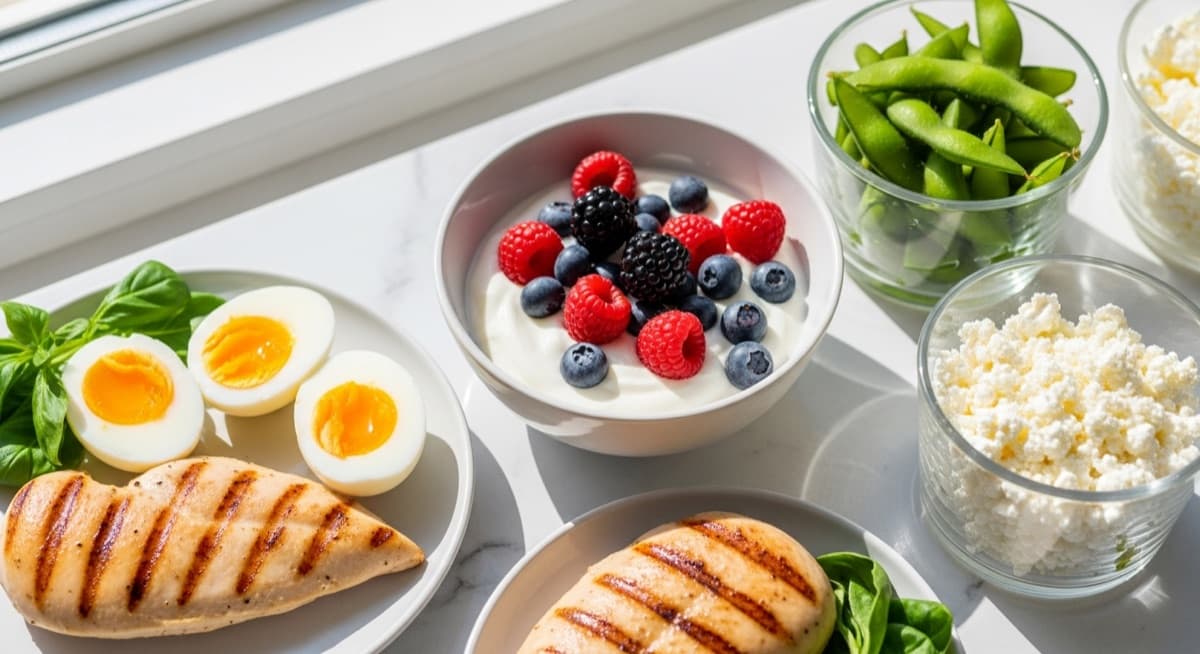
If you've ever wondered whether you're eating enough protein for muscle growth, you're not alone — it's one of the most searched and most misunderstood topics in fitness. This article breaks down exactly how much protein you need, when to eat it, and which foods deliver the most bang per bite so you can stop guessing and start growing.
Why Protein Is the Foundation of Muscle Growth
Muscle tissue is built from amino acids, and amino acids come from dietary protein. When you train, you create micro-tears in muscle fibers. Protein supplies the raw material your body uses to repair and rebuild those fibers — thicker and stronger than before. Without enough of it, that repair process stalls, no matter how hard you train.
Beyond building tissue, protein also:
- Preserves lean mass during a caloric deficit, so you lose fat instead of muscle
- Supports recovery, reducing delayed-onset muscle soreness (DOMS) between sessions
- Keeps you fuller longer, which helps manage total calorie intake
- Has a high thermic effect — your body burns more energy digesting protein than carbs or fat
How Much Protein Do You Actually Need for Muscle Growth?
Mainstream dietary guidelines recommend around 0.8 g of protein per kilogram of bodyweight per day. That's fine for sedentary adults. For active people chasing muscle growth, the evidence points clearly higher.
Most sports nutrition research and registered dietitian consensus falls in the range of 1.6–2.2 g of protein per kilogram of bodyweight per day for people actively resistance training. In practical terms for someone who weighs 75 kg (165 lbs), that's roughly 120–165 g of protein daily.
A simple starting point
Here's a quick breakdown by goal:
- Maintenance / light activity: ~1.2–1.4 g/kg bodyweight
- Building muscle (moderate training): ~1.6–2.0 g/kg bodyweight
- Building muscle (intense training, aggressive cut): ~2.0–2.4 g/kg bodyweight
Use the LifeBar AI macro calculator to plug in your weight and goal and get a personalized daily protein target in seconds.
Pro tip: Spreading protein intake across 3–4 meals of roughly 30–40 g each tends to maximize muscle protein synthesis better than eating the same total protein in one or two large sittings. Aim for at least 2.5–3 g of leucine per meal — leucine is the key amino acid that flips the muscle-building switch.
The Best High-Protein Foods for Muscle Growth
Not all protein sources are created equal. Complete proteins — those containing all nine essential amino acids in meaningful quantities — are the gold standard for muscle growth. Animal sources are generally complete; most plant sources benefit from being paired.
Animal-based protein sources
- Chicken breast (cooked, 100 g): ~31 g protein, ~165 calories — lean, versatile, no-brainer staple
- Eggs (2 large): ~13 g protein, rich in leucine, choline, and healthy fats; yolks included
- Greek yogurt (plain, 200 g): ~17–20 g protein, plus probiotics and calcium — great post-workout
- Canned tuna (1 can, ~140 g drained): ~30–35 g protein, near-zero fat, affordable
- Salmon (cooked, 100 g): ~25 g protein, plus omega-3 fatty acids that support inflammation control post-training
- Cottage cheese (200 g): ~22 g protein, high in casein — slow-digesting, ideal before sleep
- Lean beef (95% ground, 100 g): ~26 g protein, plus creatine and zinc
Plant-based protein sources
- Edamame (1 cup cooked): ~17 g protein, complete amino acid profile
- Lentils (1 cup cooked): ~18 g protein, plus ~16 g fiber — pair with rice for a complete amino acid profile
- Tempeh (100 g): ~19 g protein, fermented, gut-friendly
- Firm tofu (100 g): ~8–10 g protein — works best when you eat a larger portion or combine with another source
- Hemp seeds (3 tbsp): ~10 g protein, complete profile, easy to add to smoothies or oats
Protein Timing: Does It Really Matter?
The old "anabolic window" idea — that you had to pound a shake within 30 minutes of training or gains would vanish — has been largely revised. Current evidence suggests the window is wider than originally thought, probably several hours on either side of a workout.
That said, timing still has practical value:
Pre-workout
Eating a protein-containing meal 1–2 hours before training (e.g., chicken + rice, or Greek yogurt + fruit) gives your body available amino acids during and after the session. No need to train fasted unless you prefer it and can hit your daily total otherwise.
Post-workout
A 30–40 g protein meal or shake within 1–2 hours after training is a reliable way to kick-start recovery. It doesn't have to be a supplement — whole food works just as well.
Before bed
Casein-rich foods like cottage cheese or a casein shake consumed before sleep provide a slow drip of amino acids overnight, during the longest fasting period of your day. Studies show this can meaningfully support overnight muscle protein synthesis.
Do You Need Protein Supplements?
Short answer: no. Whole foods can get you to your protein target perfectly well. Supplements are convenient, not magical.
Whey protein is the most studied and effective supplement for muscle growth. It's fast-digesting, rich in leucine, and mixes easily. A scoop typically delivers 20–25 g of protein.
Casein protein digests slowly, making it useful at night or between widely-spaced meals.
Plant-based blends (pea + rice is a popular combo) can match whey's amino acid profile when combined and are a solid option for vegans.
If you're consistently hitting 1.6+ g/kg from whole foods, you don't need a supplement. If life gets busy and whole-food protein becomes hard to hit, a shake is a practical tool, not a shortcut.
Tracking Your Protein for Muscle Growth
Knowing your target is one thing. Actually hitting it daily is another.
Most people dramatically underestimate how much protein they eat — and overestimate what a "high-protein" meal actually contains. Tracking what you eat, even for a few weeks, creates enormous clarity. You'll quickly learn which meals are protein-dense and which just feel like they are.
LifeBar AI makes this dead simple: snap a photo of your meal and instantly get the full macro breakdown — protein, carbs, fat, and calories — without manually logging every ingredient. It's the fastest way to stay on top of your daily protein target without obsessing over food scales.
Common Protein Mistakes That Stall Muscle Growth
Even people who think they eat a lot of protein often fall into these traps:
- Front-loading calories at dinner — eating most of your protein in one meal limits how well your body can use it across the day
- Skipping protein at breakfast — starting the day with a carb-heavy breakfast and zero protein is a missed opportunity; even 20–30 g at breakfast makes a meaningful difference
- Relying on "protein-fortified" processed foods — bars and snacks labeled high-protein often deliver 8–12 g and come with significant sugar and additives; whole foods are more efficient
- Not adjusting as weight changes — if you've gained muscle and weight, your protein target should increase proportionally
- Eating enough total but too little per meal — spreading 150 g of protein across 6 meals of 25 g each may leave some muscle-building potential on the table vs. 3–4 meals of 35–50 g
Frequently Asked Questions
How much protein per day to build muscle for a 180 lb person?
At 180 lbs (~82 kg), you'd target roughly 130–180 g of protein per day for muscle growth, using the 1.6–2.2 g/kg guideline. A practical starting point is 150 g and adjusting based on recovery and progress. Use a macro calculator to fine-tune the number to your training intensity and body composition goals.
Can you eat too much protein?
For healthy adults, higher-protein diets are generally well-tolerated. However, very high intakes (well above 3 g/kg) don't appear to provide additional muscle-building benefits and simply add unneeded calories. If you have pre-existing kidney conditions, consult a registered dietitian before significantly increasing protein intake.
Is protein for muscle growth different if you're doing cardio too?
Not dramatically. Endurance athletes do have slightly elevated protein needs compared to sedentary people, but they're still in a similar range (1.4–1.8 g/kg). If you're combining heavy lifting with significant cardio — a common pattern in functional fitness or sport training — staying toward the upper end of the range (2.0–2.2 g/kg) is sensible, especially if you're in a caloric deficit.
Does protein timing matter more than total daily intake?
Total daily intake is the more important variable. Nail the total first. Once you're consistently hitting your target, optimizing timing (spreading across meals, post-workout window, before bed) can provide incremental benefit. Don't stress about timing until the total is locked in.
What if I'm plant-based — can I still build muscle?
Absolutely. Plant-based athletes build serious muscle. The main adjustments: eat slightly more total protein (since plant proteins have slightly lower digestibility and some are incomplete), prioritize complete or complementary protein combos (e.g., edamame, soy, pea protein, or rice + beans), and consider a leucine supplement or a pea/rice protein blend to ensure adequate leucine per meal.
The Bottom Line
Protein for muscle growth isn't complicated once you know the numbers: target 1.6–2.2 g per kilogram of bodyweight daily, spread it across 3–4 meals, prioritize whole-food sources, and stay consistent. Training hard but eating too little protein is like building a house without enough bricks — the blueprint is there, the materials aren't.
Before making major changes to your diet or supplement routine, it's always worth checking in with a registered dietitian who can tailor recommendations to your specific health history and goals.
The easiest way to know if you're actually hitting your protein target every day? Stop estimating and start tracking. Download LifeBar AI, snap your meals, and see your macros in real time — so the only thing you need to focus on is the work.