sleep · 1 min read
Brown noise for sleep, and what the colours actually mean
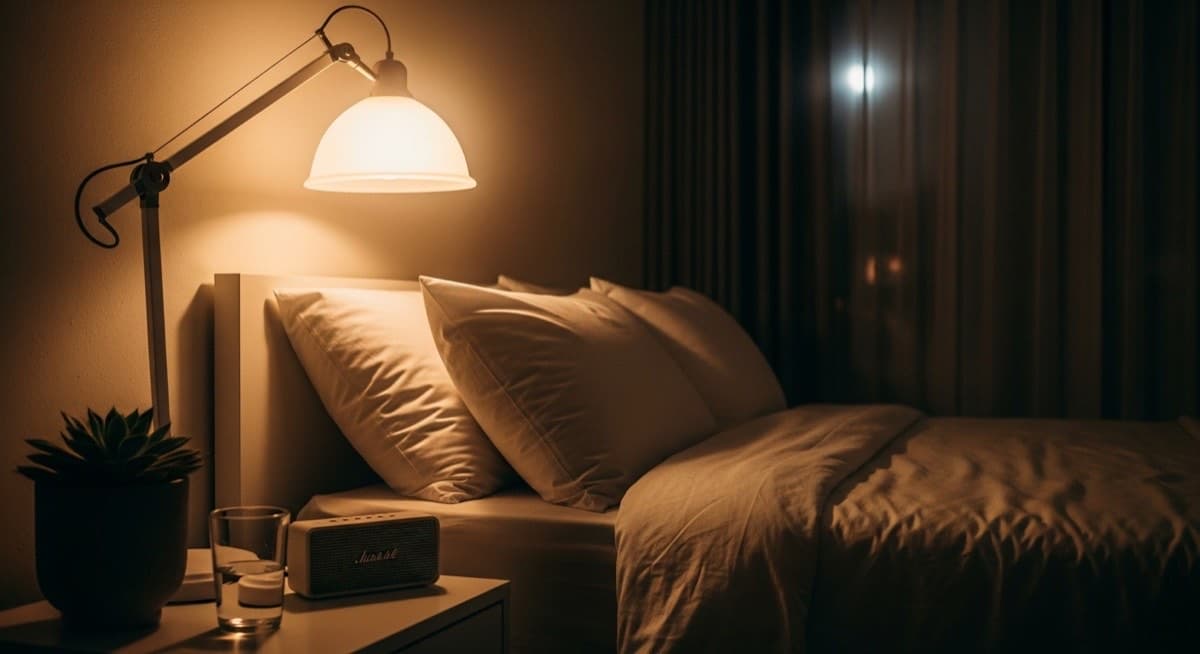
Brown noise for sleep emphasises the low frequencies, which most people find easier to sleep through than white or pink. The colours describe how sound energy is spread across the spectrum.
Written by Lifebar Desk · Checked against the sources listed below
Published 27 Aug 2026
Key takeaways
- White noise is flat across frequencies; pink and brown weight progressively toward the low end.
- Continuous sound helps mainly by masking intermittent noise, not by inducing sleep directly.
- Keep playback below about 50 dB and avoid sleeping with earbuds in.
The colour names are not marketing. They describe the slope of the sound's power spectrum.
What each colour is
- White noise, equal power at every frequency; sounds bright, like static
- Pink noise, power falls as frequency rises; sounds like steady rain
- Brown (red) noise, falls faster still; sounds like a waterfall or distant thunder
Lower frequencies dominate in brown noise, which is why most people describe it as warmer and less fatiguing over a full night.
What the evidence supports
A 2021 systematic review found the literature small and methodologically weak, with some trials showing faster sleep onset and others showing none. The mechanism that does hold up is masking: continuous sound raises the floor so that a door, a car or a snoring partner no longer crosses your arousal threshold.
Using it sensibly
- Volume: quiet enough to talk over, roughly 50 dB or less
- Placement: across the room, never a speaker beside your head
- Playback: continuous all night, since a track that stops can itself wake you
- Devices: prefer a speaker over earbuds, which risk ear canal irritation
When it will not help
Noise masking does nothing for an irregular schedule, late caffeine, alcohol or untreated sleep apnea. It is a tool for one specific problem, an unpredictable sound environment.
Frequently asked
Is white noise bad for you?
At sensible volumes there is no established harm in adults. Concerns centre on loud playback near infant ears, where guidance recommends keeping devices away from the cot and below 50 dB.
Which colour is best?
Personal preference. Brown noise is deeper and less hissy, pink sits between, white is brightest. Masking performance is similar if the volume covers the intrusive sound.
Sources
Educational content, talk to your clinician before changing treatment.