weight-loss · 1 min read
Ultra processed foods added 500 calories a day in a controlled trial
Ultra processed foods drove participants to eat roughly 500 more calories daily in a controlled NIH trial with matched nutrients, and they gained weight in two weeks.
Written by Lifebar Desk · Checked against the sources listed below
Published 13 Sept 2026
Key takeaways
- In a metabolic-ward crossover trial, participants ate about 500 kcal more per day on ultra-processed food.
- Diets were matched for calories offered, sugar, fat, fiber and sodium, the processing itself drove intake.
- Eating rate was faster on the processed diet, which is the leading explanation.
Most nutrition debate happens in observational data, where confounding never fully goes away. This one was a locked-ward experiment.
The design
NIH researchers admitted 20 adults for four weeks. Two weeks on an ultra-processed diet, two weeks on a minimally processed one, order randomised. Both arms were matched for calories presented, macronutrients, sugar, sodium and fiber. Participants ate as much or as little as they wanted.
The result
On the ultra-processed diet people ate about 500 kcal more per day and gained roughly 0.9 kg in two weeks. On the minimally processed diet they lost about the same. Nobody was told which arm they were on, and appetite ratings barely differed.
The likely mechanism
Participants ate faster on the processed diet, softer textures, less chewing, more calories per bite. Satiety signals arrive on a delay measured in minutes, so eating speed translates directly into extra intake before the brake engages.
Practical reading
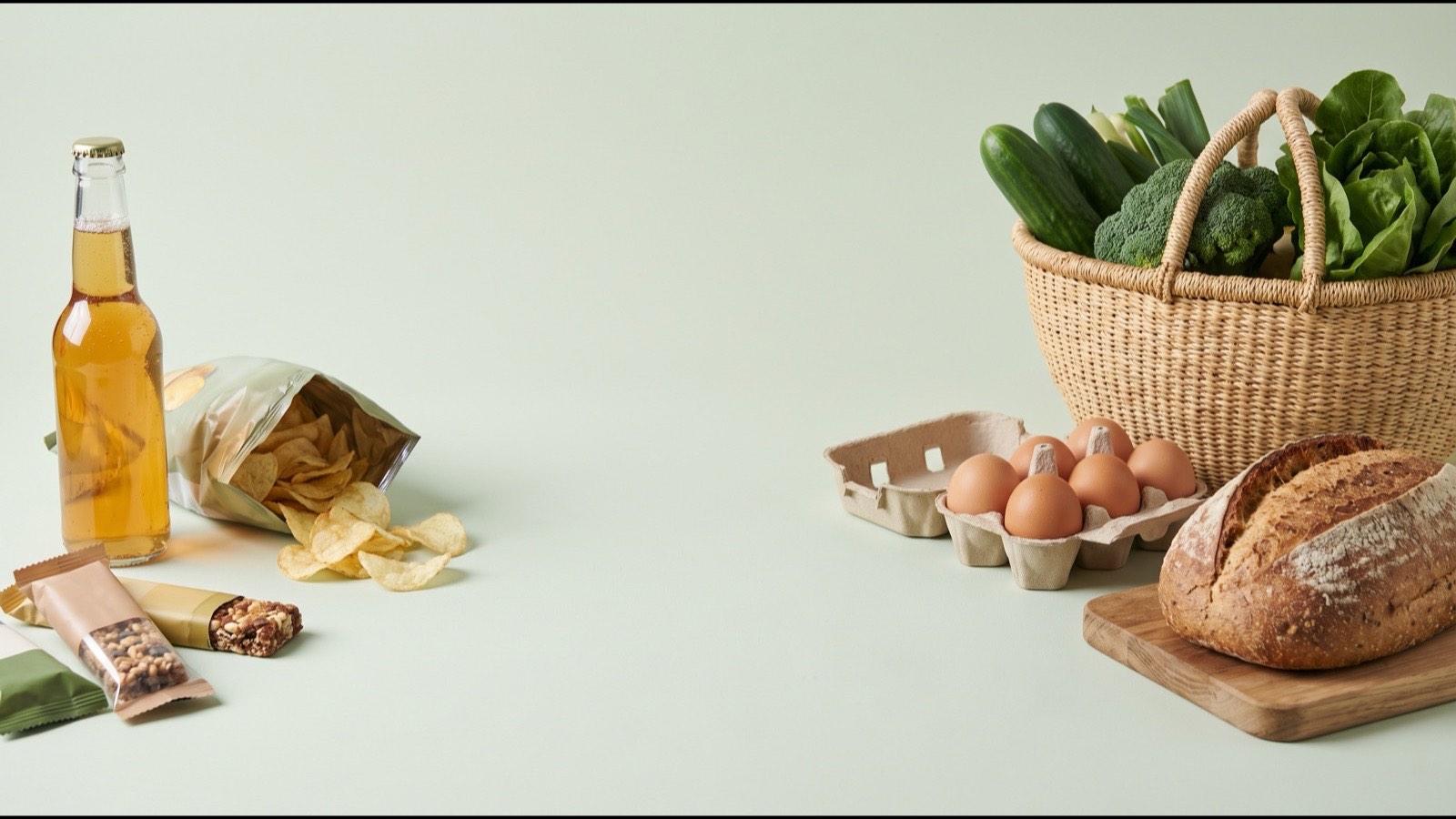
- Soft, energy-dense and quick to eat is the pattern to watch, not the word "processed"
- Adding whole foods that require chewing slows meals without counting anything
- Home cooking wins mostly because it is slower to eat, not because it is morally superior
One 20-person trial does not settle nutrition science. But it is the cleanest evidence yet that how food is built changes how much of it you eat.
Frequently asked
Is all processed food bad?
No. Frozen vegetables, tinned beans, yoghurt and wholegrain bread are processed and fine. The signal sits with industrially formulated, hyper-palatable products.
Was the trial big?
It was small, 20 adults, but it was a tightly controlled inpatient crossover, which buys causal strength that large surveys cannot.
Sources
Educational content, talk to your clinician before changing treatment.